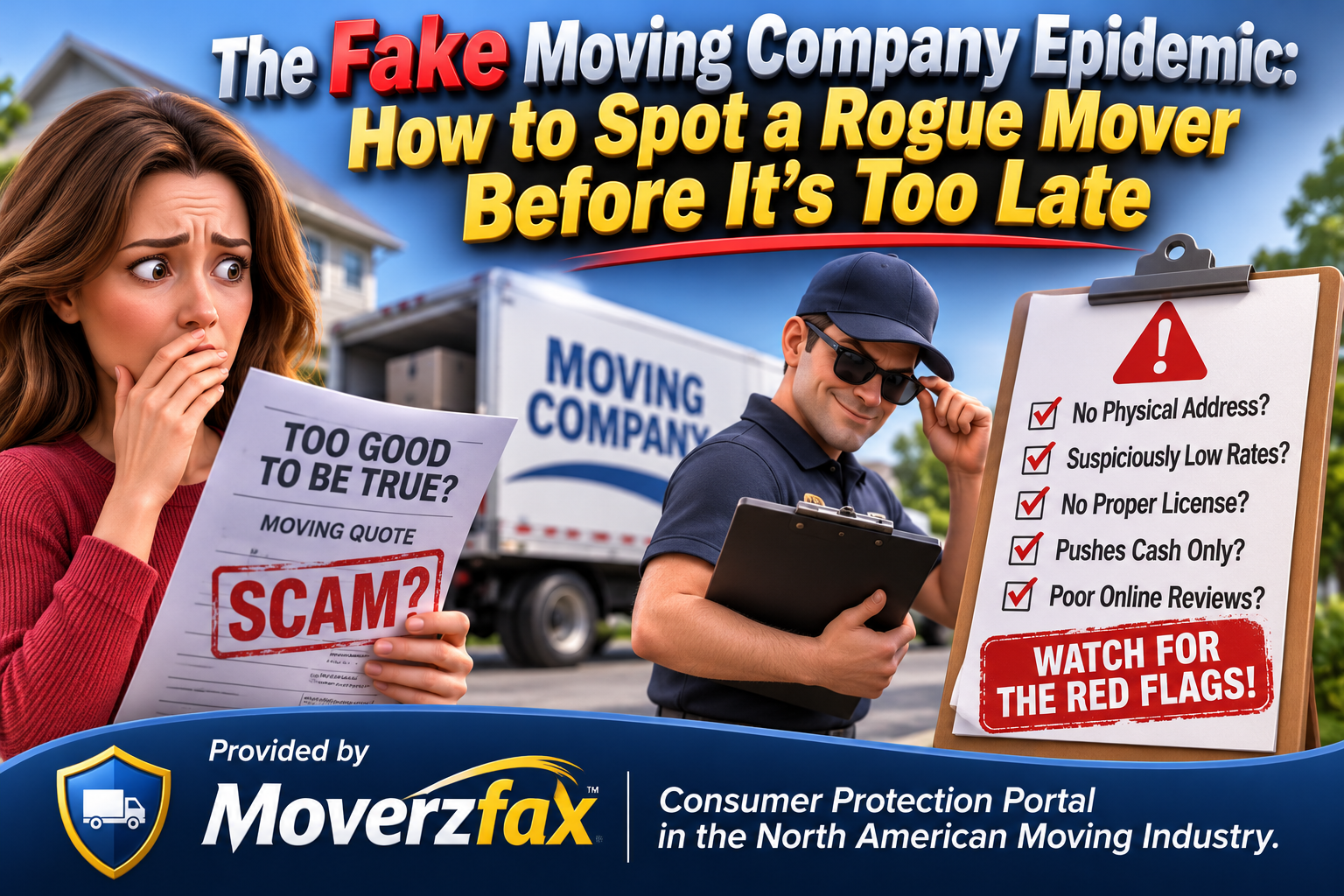
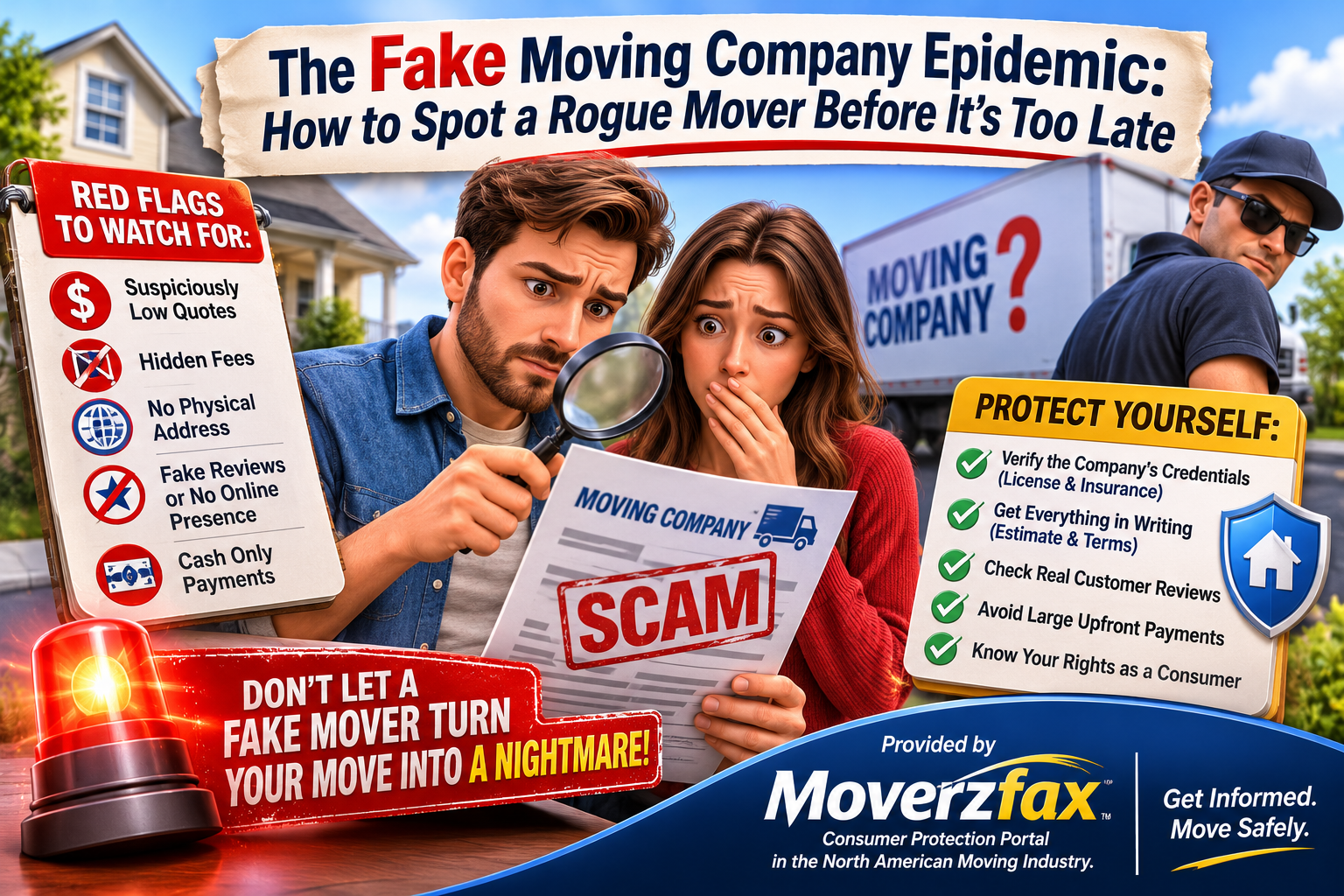
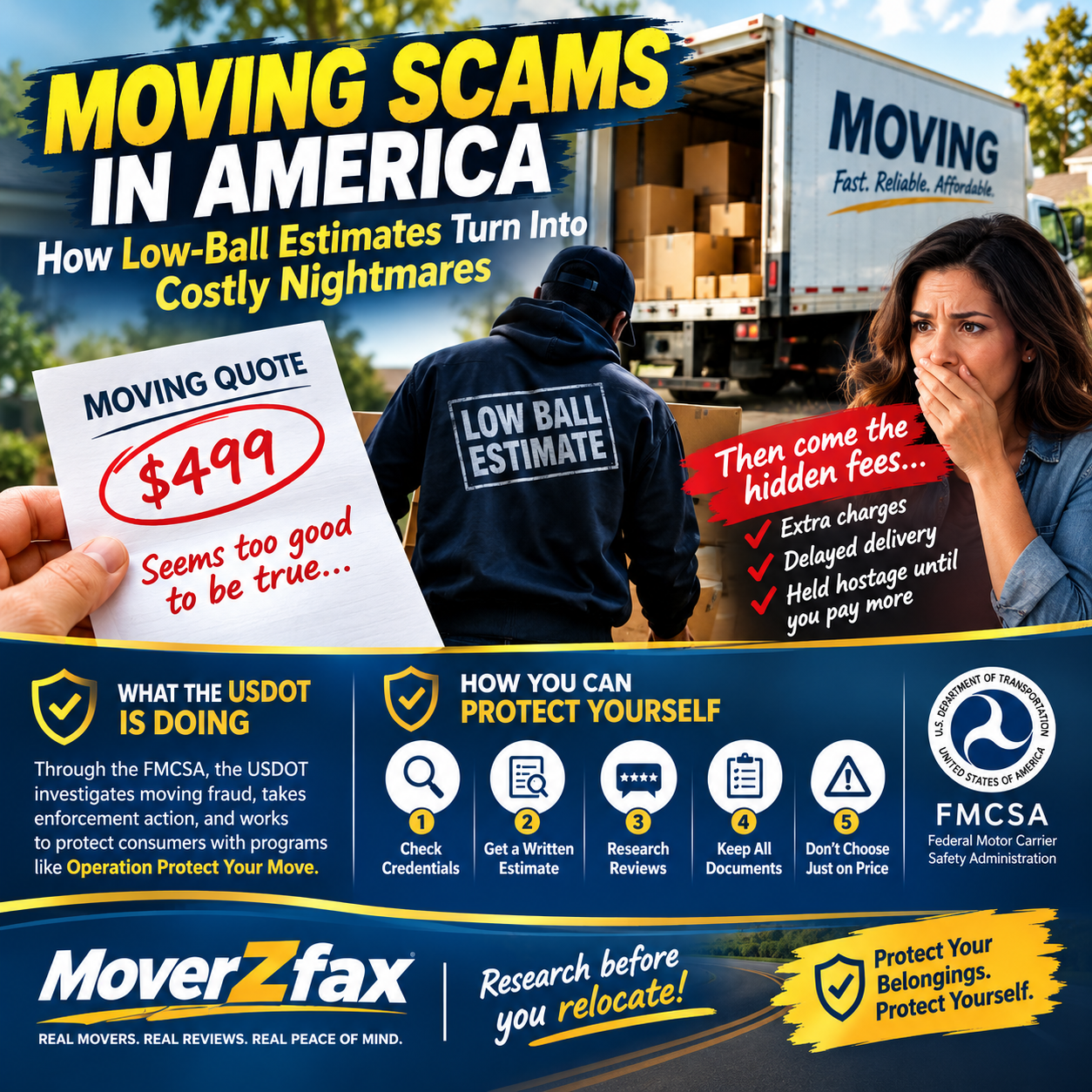
Expose warning signs such as fake business addresses, misleading websites, questionable registration information, suspicious reviews, and constantly changing company names.
The website looks legitimate. The company has a professional
logo, a business address, glowing five-star reviews, and a representative who
promises you a smooth, affordable relocation. You feel comfortable, pay your
deposit, and start preparing for moving day. But what if the company you just
hired isn't who it claims to be? What if the address doesn't exist, the
registration belongs to another business, or the company has operated under
several different names? By the time you discover the truth, your money may be
gone and your belongings could be at risk.
Welcome to one of the most concerning challenges consumers
face in the North American moving industry: identifying questionable moving
companies before becoming their next customer.
A Professional Website Doesn't Mean a Legitimate Business.
Imagine a couple relocating from Chicago to Tampa. They find a moving
company online with an impressive website, attractive pricing, and pictures of
trucks and professional moving crews. Everything looks convincing. After paying
a deposit, they begin trying to contact the company to confirm their moving
date. Calls go unanswered, emails receive generic responses, and the business
address listed on the website turns out to be a virtual office or an address
that cannot be independently verified. Suddenly, the couple starts wondering
whether the company is operating as advertised. A website can be created
quickly, and professional branding is not proof of legitimate operating
authority. Consumers should verify the actual business behind the website rather
than judging a mover by its appearance.
The Business Address That Doesn't Tell the Whole Story. A
legitimate moving business does not necessarily need a traditional storefront,
and some companies operate from warehouses, offices, or shared facilities. However,
consumers should be cautious when an address appears inconsistent, belongs to
an unrelated business, or cannot be verified. Imagine visiting the address
listed on a moving company's website only to discover that no moving business
operates there. That alone does not prove fraud, but it raises an important
question: Who are you actually doing business with? Ask for the company's legal
business name, physical business information, and applicable registration
details. Verify that the information is consistent across its contracts,
website, and regulatory records.
Questionable Registration: Numbers That Don't Match. Another
serious warning sign occurs when a company advertises a registration number
that belongs to a different business, is inactive, or does not authorize the
services being offered. For interstate household goods moves in the United States,
consumers should verify the mover's USDOT number and applicable operating
authority through the Federal Motor Carrier Safety Administration (FMCSA). Remember,
displaying a USDOT number on a website or truck does not automatically
establish that a company is authorized to transport household goods. Check the
legal business name, registration status, operating authority, company
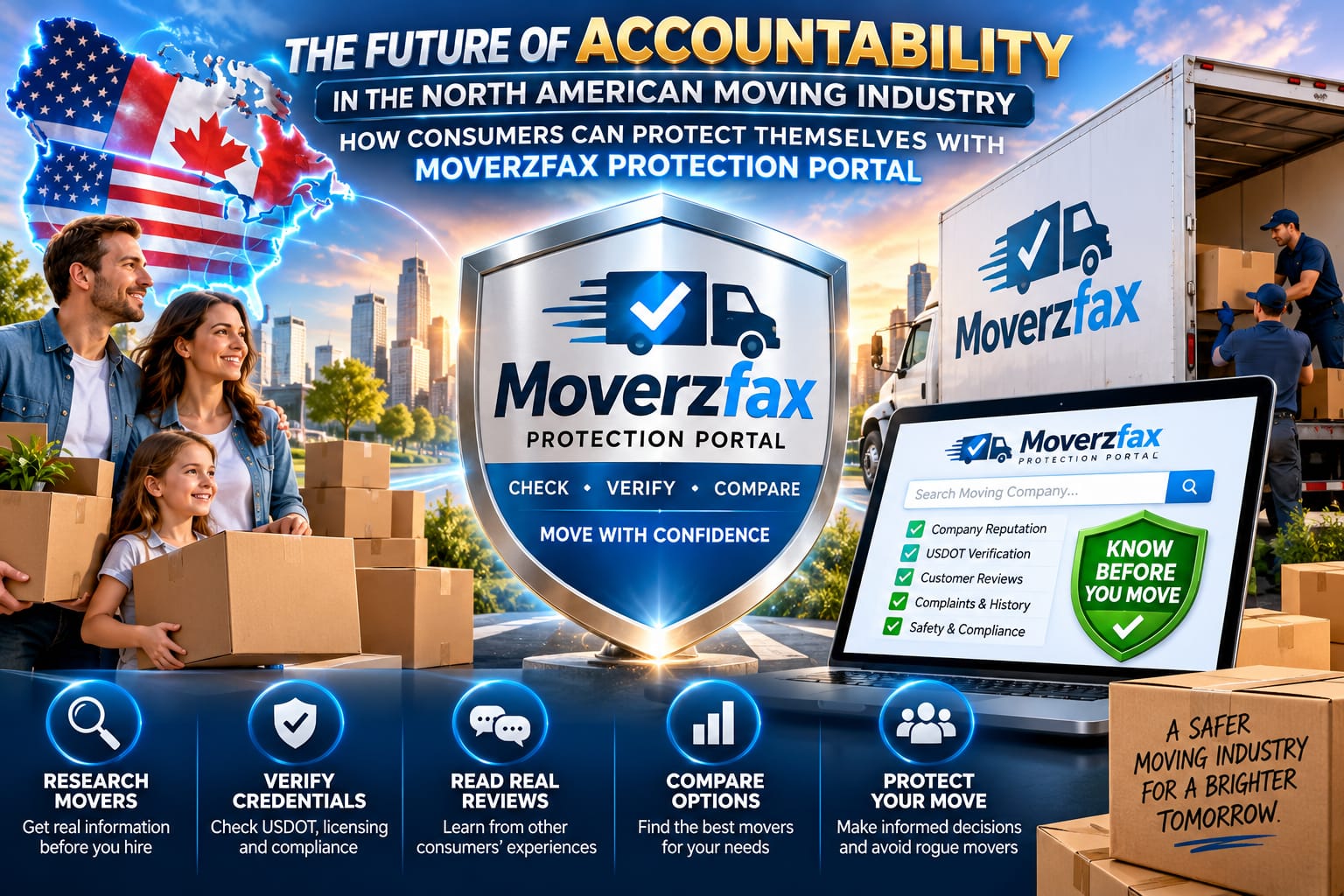
information directly through official records and ASK them to provide you with Moverzfax report.
Five-Star Reviews: Are They Telling the Whole Story?
Consider another scenario. A homeowner finds a mover with hundreds of glowing
reviews. Almost every customer seems delighted, and the company appears to have
an outstanding reputation. But after looking more closely, the homeowner
notices that many reviews use similar wording, several accounts have little
review history, and the negative reviews describe remarkably similar problems
involving unexpected charges and delayed deliveries. Fake or manipulated
reviews can make questionable businesses appear trustworthy. Consumers should
examine reviews across multiple independent platforms, look for detailed
customer experiences, and pay attention to recurring complaints rather than
relying exclusively on star ratings.
The Company That Keeps Changing Its Name. Perhaps one of the
most concerning warning signs is when a moving operation repeatedly changes its
business identity. Imagine discovering that a company previously operated under
another name, has different contact information, and appears connected to
multiple businesses with similar websites and sales representatives. There can
be legitimate reasons for a company to change its name or reorganize its
business. However, repeated unexplained identity changes, inconsistent
registration information, and unresolved complaints deserve closer examination.
Don't assume a new company name means a clean business history. Investigate the
actual legal entity and the carrier responsible for your move.
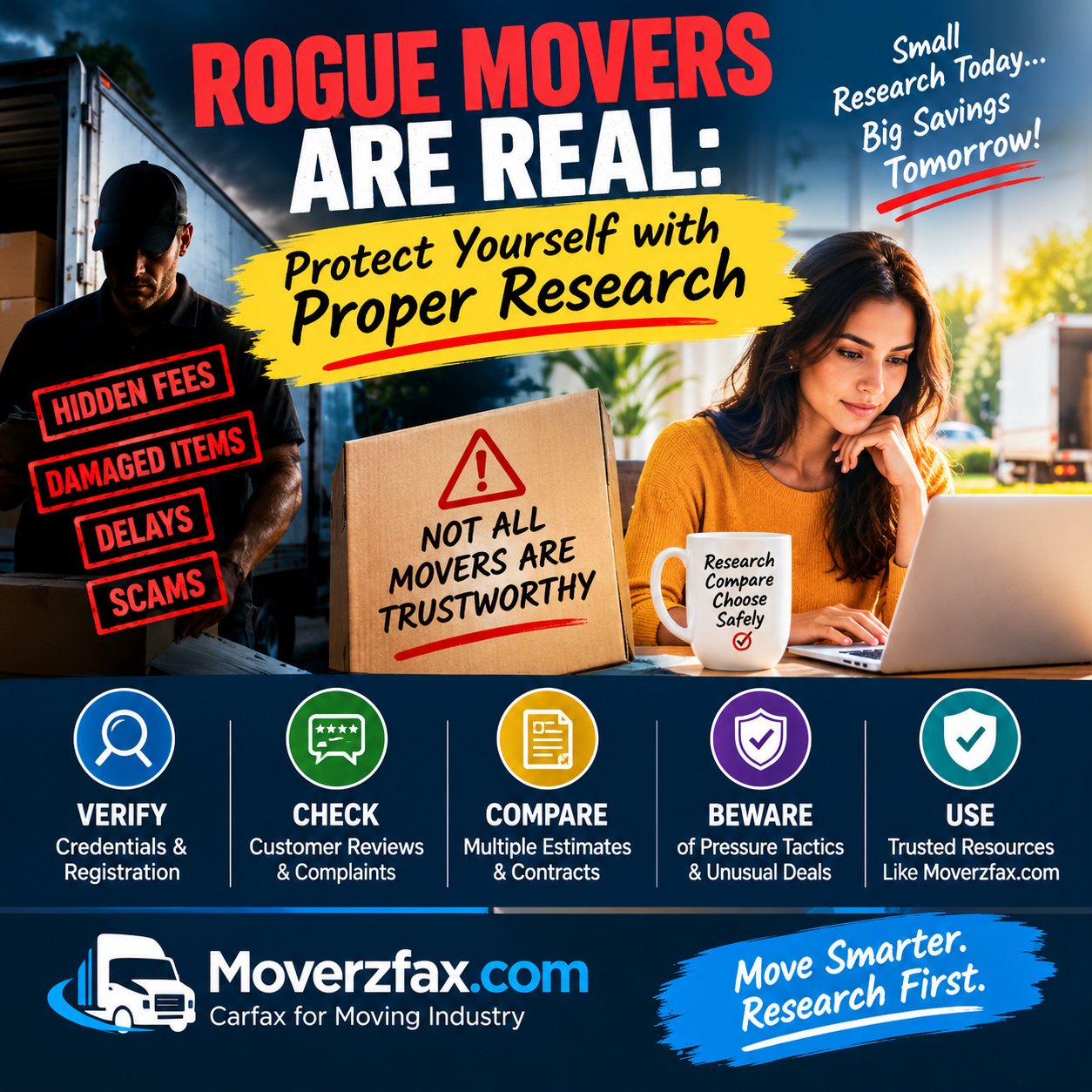
Before You Book, Do Your Homework. Verify the company's
identity and applicable operating authority, check its address, research
independent reviews, understand whether you are dealing with a broker or actual
carrier, and insist on written estimates and contracts. Never allow an
attractive price or a convincing salesperson to rush your decision. For
interstate moves in the United States, start with the FMCSA's official consumer
protection resources at https://www.fmcsa.dot.gov/protect-your-move. Keep copies
of estimates, contracts, payment receipts, emails, and text messages. If
something doesn't add up, ask questions before handing over your money or
belongings.
Moverzfax: Helping Consumers See Beyond the Sales Pitch. The
reality is that consumers should not have to become investigators just to hire
a moving company. Yet in today's marketplace, taking a few extra steps to
verify a mover could prevent serious financial and emotional consequences. At
Moverzfax, our mission is to educate consumers, expose questionable business
practices, and promote transparency and accountability throughout the North
American moving industry. We believe consumers deserve honest information,
legitimate operators deserve recognition, and questionable practices deserve
scrutiny.
NOW WE WANT TO HEAR FROM YOU! Have you ever discovered that
a moving company's address was questionable, its registration information
didn't match, its online reviews seemed suspicious, or the business suddenly
changed its name? Did you discover the warning signs before booking or only
after something went wrong? Share your experience in the comments. Your story
could help another family avoid becoming the next victim. Let's bring these
issues into the open and help consumers make informed decisions before trusting
anyone with everything they own.
Moverzfax – Educating Consumers. Exposing Risks. Promoting
Accountability.
#Moverzfax #FakeMovingCompanies #MovingScams #RogueMovers
#MovingFraud #ConsumerProtection #MovingIndustry #ProtectYourMove #KnowYourRights
#FMCSA #MovingCompanyReviews #ConsumerAwareness #InterstateMoving #MovingTips
#FraudPrevention








No comments published yet. Be the first to share your thoughts below!
Leave a Reply