The Future of sustainability in the North American moving Industry: How companies can reduce their environmental impact
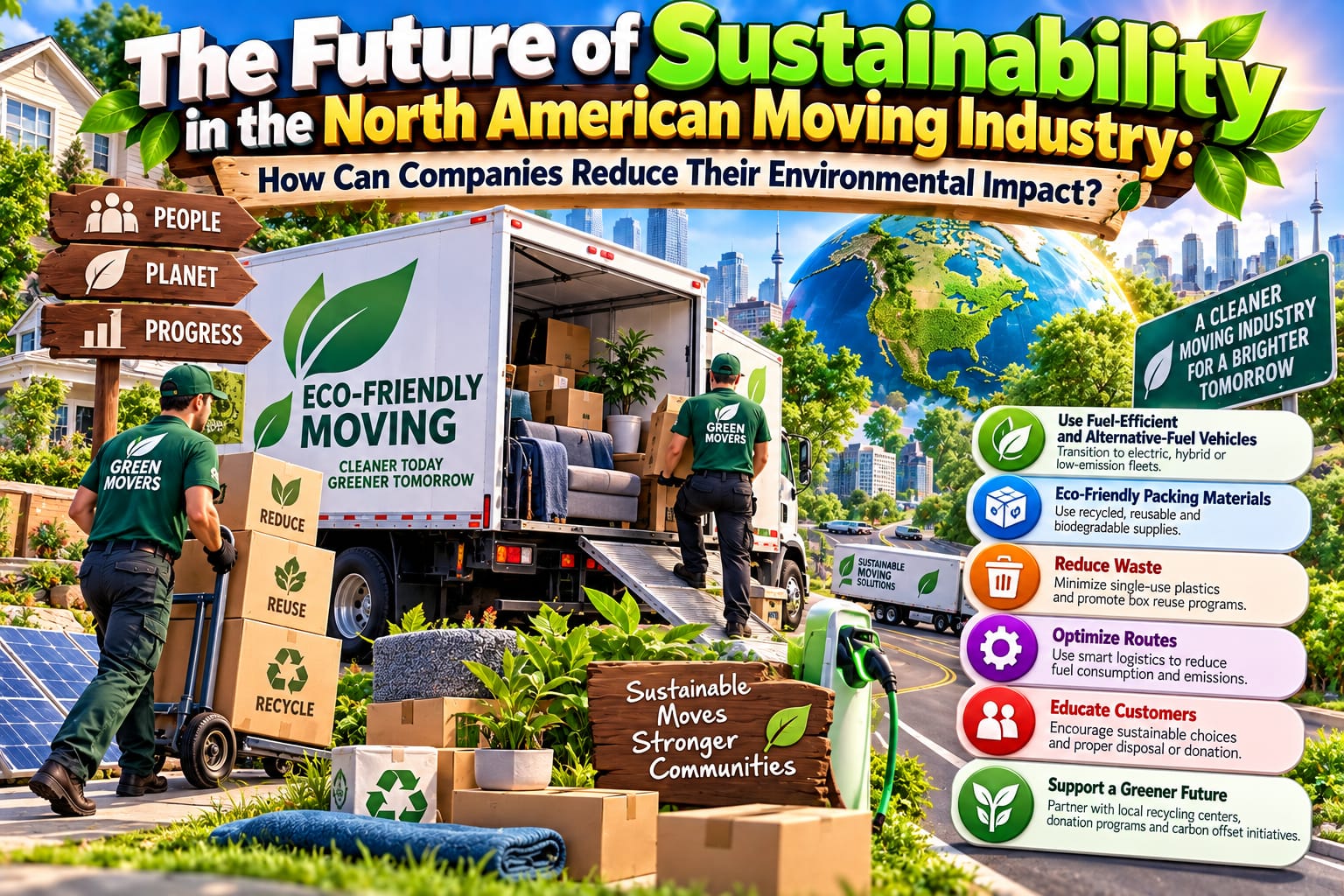
Visual Infographic
Click on the image below to expand and view full size infographic.

The North American moving industry is constantly evolving as consumer expectations, technology, and environmental concerns reshape the way companies operate. With thousands of residential and commercial moves taking place every day, moving companies have an opportunity to make a meaningful difference by adopting more sustainable business practices. From reducing fuel consumption to eliminating unnecessary packaging waste, environmental responsibility is becoming an important consideration for the industry's future.
The Environmental Challenges Facing Moving Companies
Moving operations require significant resources, including fuel, vehicles, packing materials, and warehouse facilities. Traditional moving practices often generate considerable waste through disposable cardboard boxes, plastic wrapping, packing paper, and other single-use materials. Additionally, moving trucks contribute to greenhouse gas emissions, particularly when vehicles travel long distances, operate inefficiently, or return empty after completing deliveries.
These challenges create an opportunity for moving companies to rethink their operations and identify practical ways to reduce their environmental footprint without compromising customer service.
How Moving Companies Can Become More Sustainable
One of the most effective ways to improve sustainability is by investing in fuel-efficient vehicles and exploring alternative transportation technologies. Companies can gradually introduce electric trucks, hybrid vehicles, and other lower-emission transportation options as infrastructure and budgets allow. Regular vehicle maintenance, efficient route planning, and reducing unnecessary mileage can also help lower fuel consumption.
Another important area is sustainable packing. Moving companies can introduce reusable plastic containers, recyclable cardboard boxes, biodegradable packing materials, and reusable protective blankets. Offering customers the option to rent reusable moving supplies instead of purchasing disposable materials can reduce waste while creating additional service opportunities.
Companies can also establish recycling and donation programs. Rather than sending unwanted furniture, appliances, and household items directly to landfills, movers can partner with local charities, donation centers, and recycling organizations. These partnerships help customers responsibly dispose of unwanted belongings while supporting communities.
Technology also has an important role to play. Digital estimates, electronic contracts, online inventories, and digital receipts can reduce unnecessary paperwork. Meanwhile, transportation management software can help companies coordinate deliveries, consolidate shipments where practical, and reduce empty truck mileage.
The Importance of Employee and Customer Participation
Sustainability cannot be achieved through management decisions alone. Employees should receive training on waste reduction, responsible material handling, fuel-efficient driving, and recycling procedures. Establishing clear environmental goals can encourage employees to participate and recognize their contributions.
Customers can also become part of the solution. Moving companies should educate customers about reusable packing options, responsible disposal, donation opportunities, and environmentally conscious moving services. Providing these choices allows customers to make decisions that align with their environmental priorities.
What the Industry Should Prioritize Moving Forward
Moving companies should develop measurable sustainability goals rather than relying exclusively on environmental marketing claims. Businesses can monitor fuel consumption, vehicle emissions, packaging waste, recycling rates, and energy usage to evaluate their progress.
Industry associations can further encourage sustainable practices by sharing environmental guidelines, recognizing companies that demonstrate meaningful improvements, and promoting innovation throughout the sector.
This is where it starts to make sense.
The future of the North American moving industry should involve more than transporting belongings efficiently. It should also include protecting the communities and environments in which moving companies operate. By investing in cleaner transportation, reusable packing materials, responsible recycling, and employee education, moving businesses can reduce their environmental impact while improving operational efficiency.
Sustainability should not be viewed simply as a trend or marketing opportunity. It should become a long-term business commitment. Companies that take meaningful steps toward environmental responsibility today can help create a cleaner, more efficient, and more sustainable moving industry for future generations.
Check Mover Legitimacy
Before hiring any mover, verify their USDOT registration and safety history report.
Search Mover NowRecent Articles














No comments published yet. Be the first to share your thoughts below!
Leave a Reply