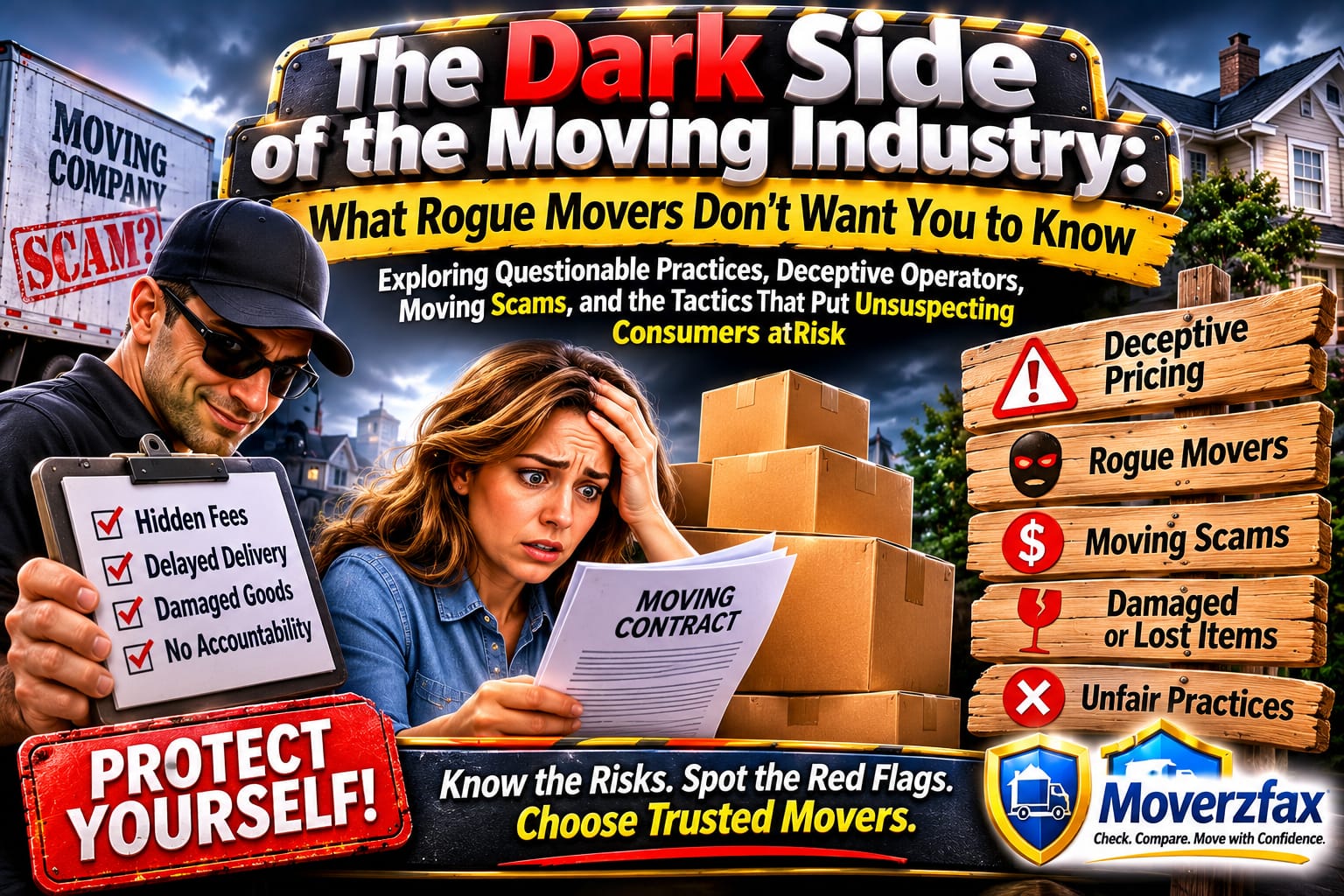
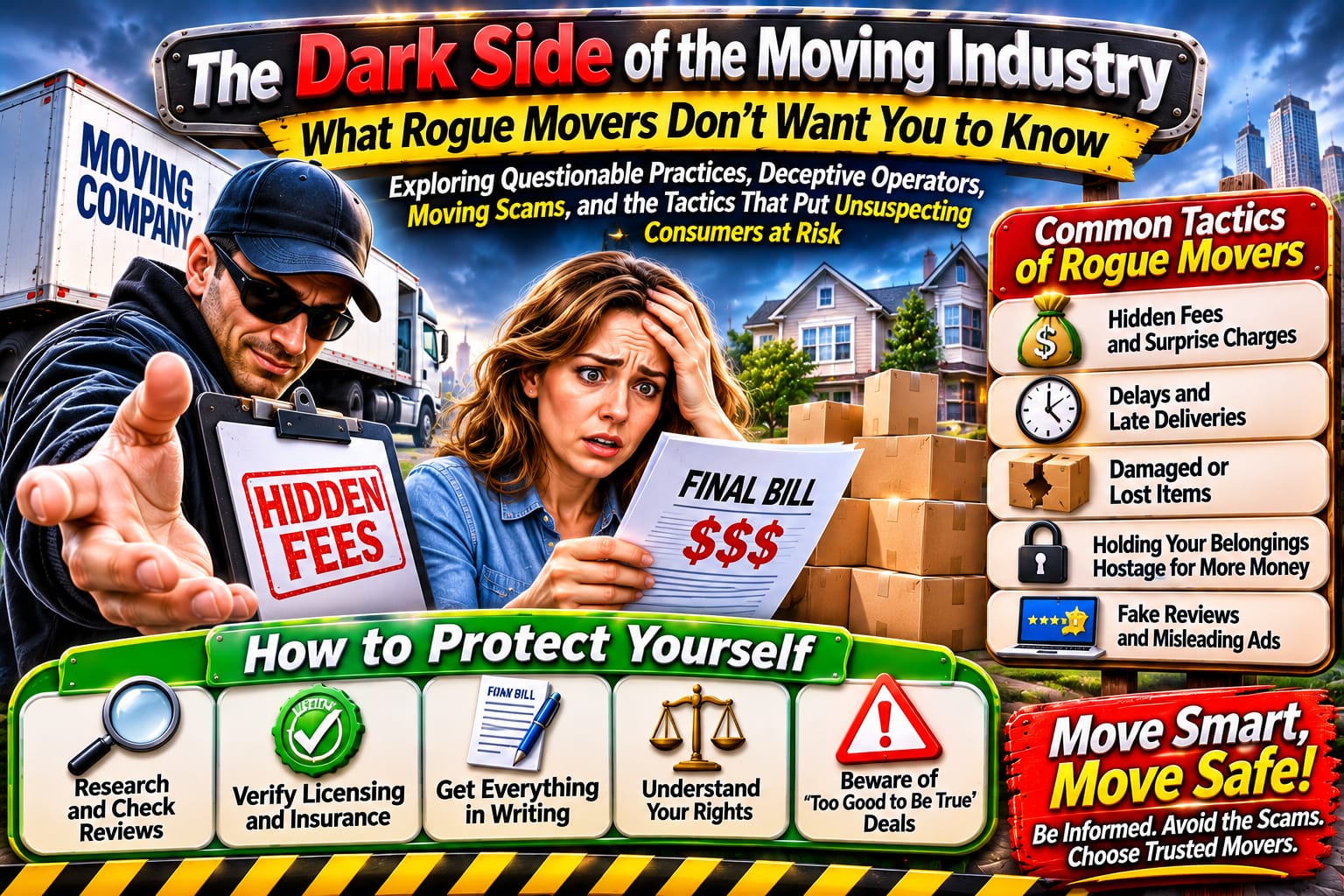
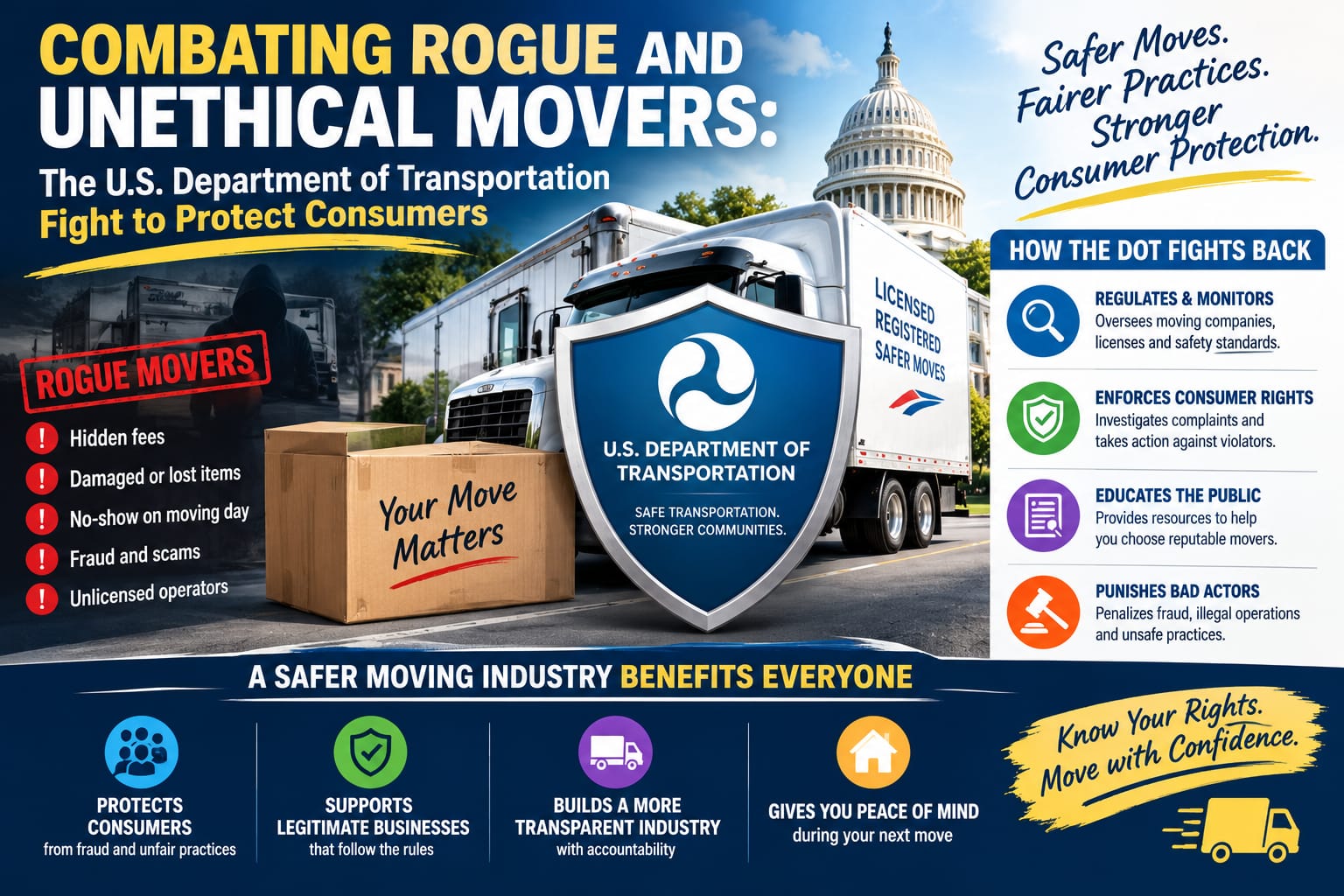
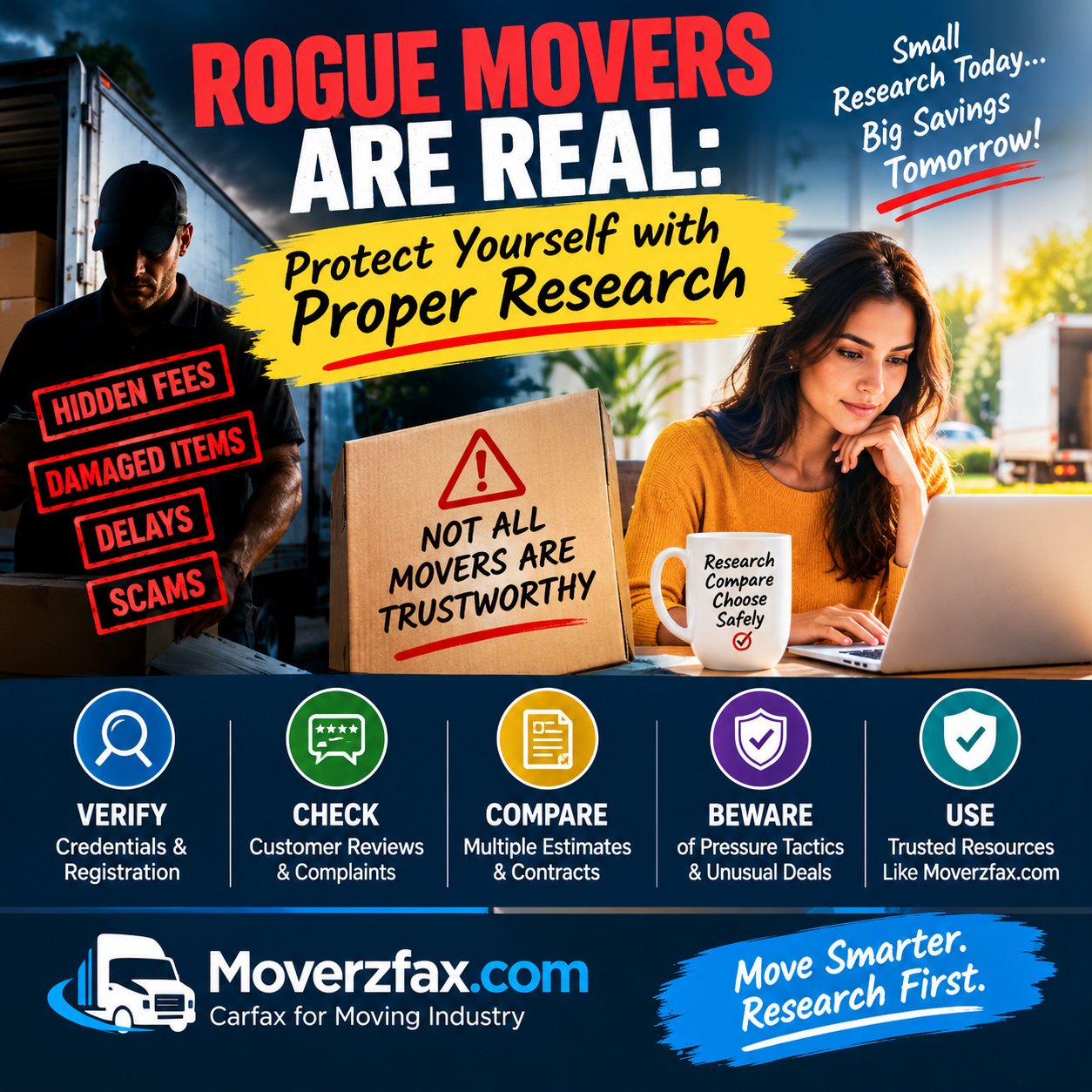
Highlighting the hidden risks of hiring the wrong moving company and explains how deceptive estimates, misleading business practices, unexpected charges, and hostage-load disputes can turn a relocation into a nightmare. It emphasizes the importance of researching movers, verifying credentials, understanding contracts, and knowing your consumer rights before signing an agreement. Through education and awareness, Moverzfax aims to protect consumers, expose questionable practices, and promote transparency and accountability throughout the moving industry.
Imagine handing over everything you own to a company you
believe you can trust, only to discover that your biggest mistake wasn't moving
to a new home, but choosing the wrong moving company. You found them online,
their website looked professional, their representative sounded knowledgeable,
and their estimate was considerably lower than the competition. Everything
seemed legitimate, so you signed the paperwork, paid your deposit, and started
preparing for your relocation. But what happens when moving day arrives and the
promises suddenly disappear? What happens when the price you were quoted is no
longer the price you are expected to pay, when unexpected charges begin
appearing, or when your belongings are loaded onto a truck and you are told
that additional money is required before delivery? For some consumers, what
should have been an exciting new beginning becomes a stressful, expensive, and
sometimes devastating experience. Welcome to the darker side of the North
American moving industry, where dishonest operators can take advantage of
consumers who simply want to move their families and belongings safely.
The moving industry is made up of thousands of legitimate,
hardworking professionals who take pride in providing quality service. However,
alongside these reputable businesses, consumers must also navigate an
environment where deceptive sales tactics, misleading estimates, questionable
business arrangements, and fraudulent operators can create serious problems.
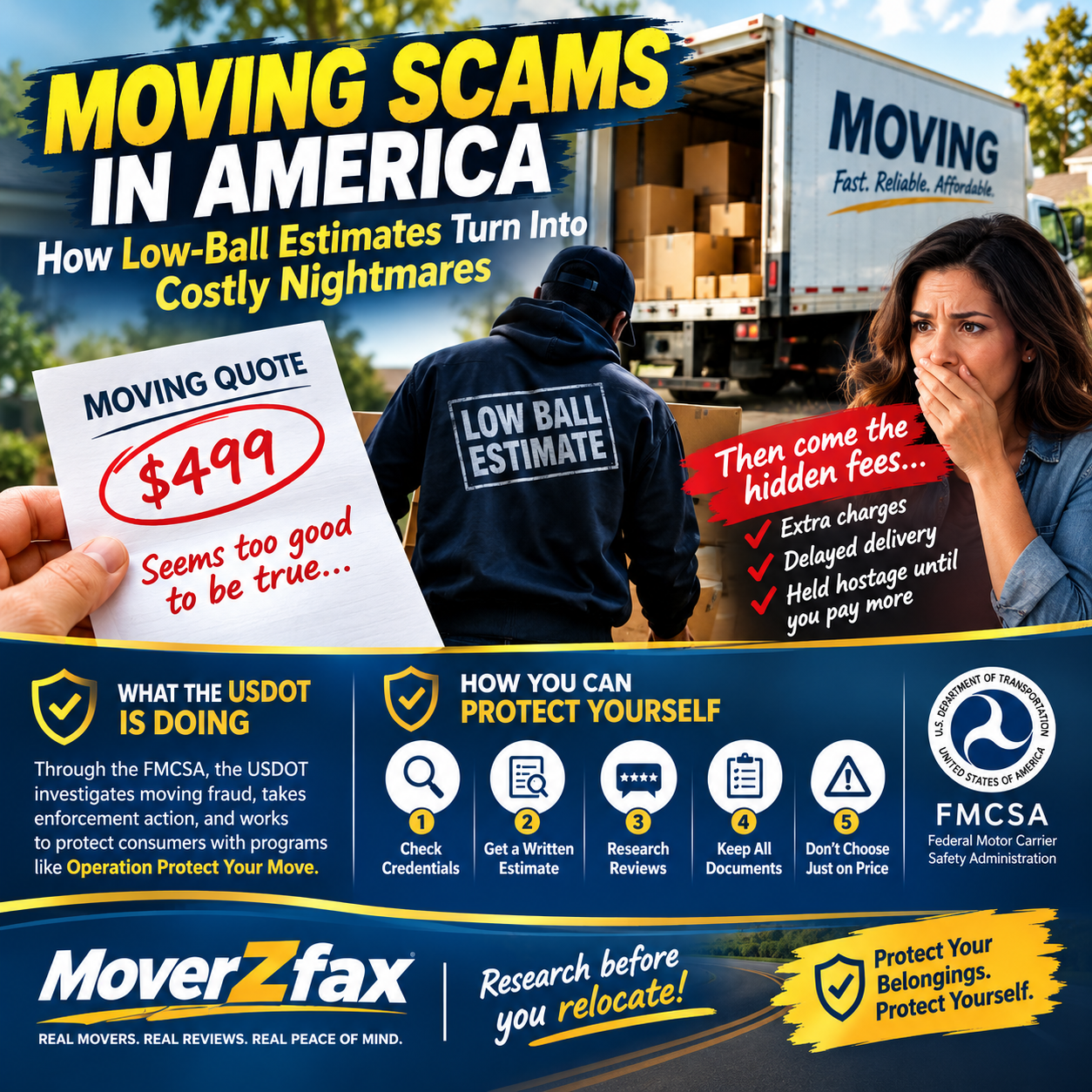
One of the most common warning signs begins with an offer that seems too good
to be true. Imagine receiving three estimates for your upcoming relocation. Two
companies provide comparable prices, while a third offers a quote thousands of
dollars lower. Naturally, the homeowner assumes they have found a bargain. But
once the moving crew arrives, the situation changes. Suddenly, the inventory is
larger than expected, additional services are required, and the final price
begins climbing. Not every price adjustment is improper, since actual shipment
weight, additional services, and changes in inventory can legitimately affect
moving costs. However, artificially low estimates followed by unexpected and
poorly explained charges are serious warning signs that consumers should never
ignore. The cheapest estimate can sometimes become the most expensive mistake.
Another issue consumers frequently misunderstand is the
difference between a moving company and a moving broker. Many people believe
that the business they contacted will be the same company physically transporting
their belongings. That is not always the case. Moving brokers arrange
transportation through authorized moving carriers, meaning the company that
collects your deposit or coordinates your reservation may not be the company
that eventually arrives at your home. Legitimate brokers can provide a useful
service, but consumers must understand exactly who they are doing business
with. Imagine booking your relocation with one company, only to discover that
an entirely different business arrives on moving day. Do you know whether that
carrier is properly authorized? Have you verified its credentials? Do you
understand who is responsible for your shipment if something goes wrong? These
are questions consumers should ask before signing an agreement, not after their
furniture has disappeared onto a moving truck.
Perhaps one of the most disturbing situations consumers can
encounter involves hostage-load disputes. Imagine arriving at your new home,
expecting your furniture, personal belongings, and household essentials, only
to receive a phone call informing you that additional payment is required
before your shipment will be delivered. Suddenly, you are faced with an
impossible situation. Your belongings are in someone else's possession, your
family is waiting, and you may feel pressured to pay simply to get your
possessions back. For interstate household goods transportation, federal
regulations provide important protections against unlawful withholding of
shipments. Consumers should understand their rights, keep their documentation,
and seek assistance from the appropriate authorities when they believe a
carrier is acting unlawfully. No consumer should assume that a moving company
can demand whatever amount it wants simply because it has possession of their
belongings.
But how do these questionable operators continue attracting
customers? One reason is that consumers often mistake appearances for
legitimacy. A professional website, a convincing sales representative, a
business address, and hundreds of positive online reviews can create an
impression of credibility. Unfortunately, none of these things independently
guarantees that a moving company is trustworthy. Some operators may use
misleading business identities, questionable advertising, manipulated reviews,
or constantly changing company names to avoid scrutiny. Others may pressure
customers into making quick decisions by claiming that special pricing is
available only for a limited time. The objective is often to get the consumer
to commit before conducting proper research. This is why checking a company's
credentials, understanding its business model, reviewing its reputation, and
examining its paperwork are essential steps before hiring any mover.
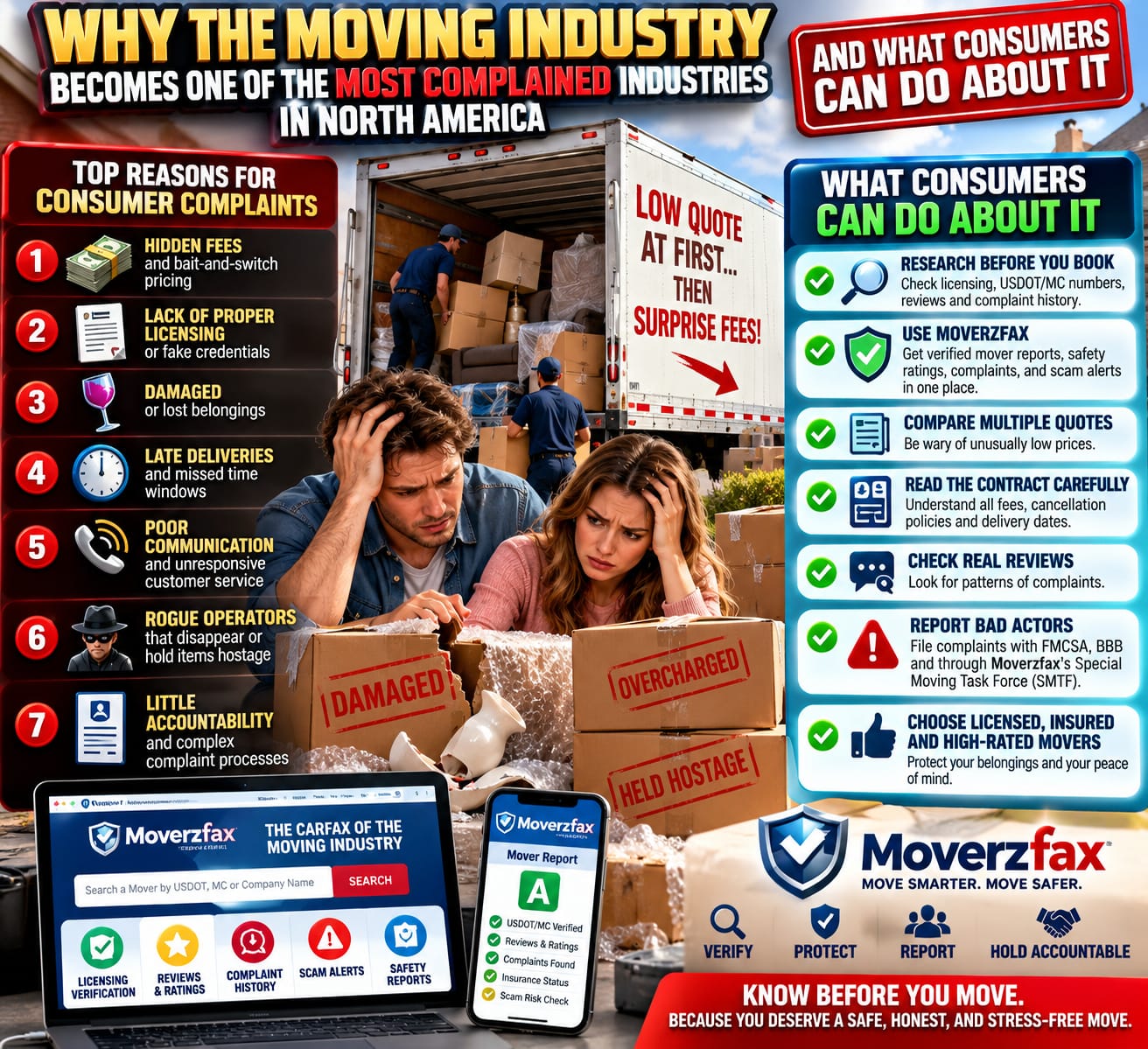
So, what should consumers look for? Be cautious when an estimate
is dramatically lower than competing offers, when representatives refuse to
provide clear written explanations of charges, when contracts contain vague
language, or when you are pressured to pay large amounts before understanding
the agreement. Verify the actual carrier responsible for your move, confirm
applicable registration and operating authority, and make sure you understand
whether you are dealing with a broker or a motor carrier. For interstate moves
within the United States,
the Federal Motor Carrier Safety Administration (FMCSA) provides resources that
allow consumers to investigate moving companies and understand their rights.
You can start by visiting https://www.fmcsa.dot.gov/protect-your-move. Take
pictures of your belongings, maintain copies of estimates and contracts, keep
payment receipts, and document important communications. These simple
precautions can make a significant difference if a dispute arises.
The reality is that moving is already one of life's most
stressful experiences. Families are dealing with new jobs, financial
commitments, school transitions, housing arrangements, and the emotional
challenges of leaving familiar surroundings. The last thing anyone needs is to
discover that the company entrusted with their possessions is operating
dishonestly. That is precisely why consumer awareness matters. The more people
understand the warning signs, the harder it becomes for deceptive operators to
exploit their lack of knowledge. Legitimate moving companies should welcome
informed customers because transparency and accountability benefit the entire
industry.
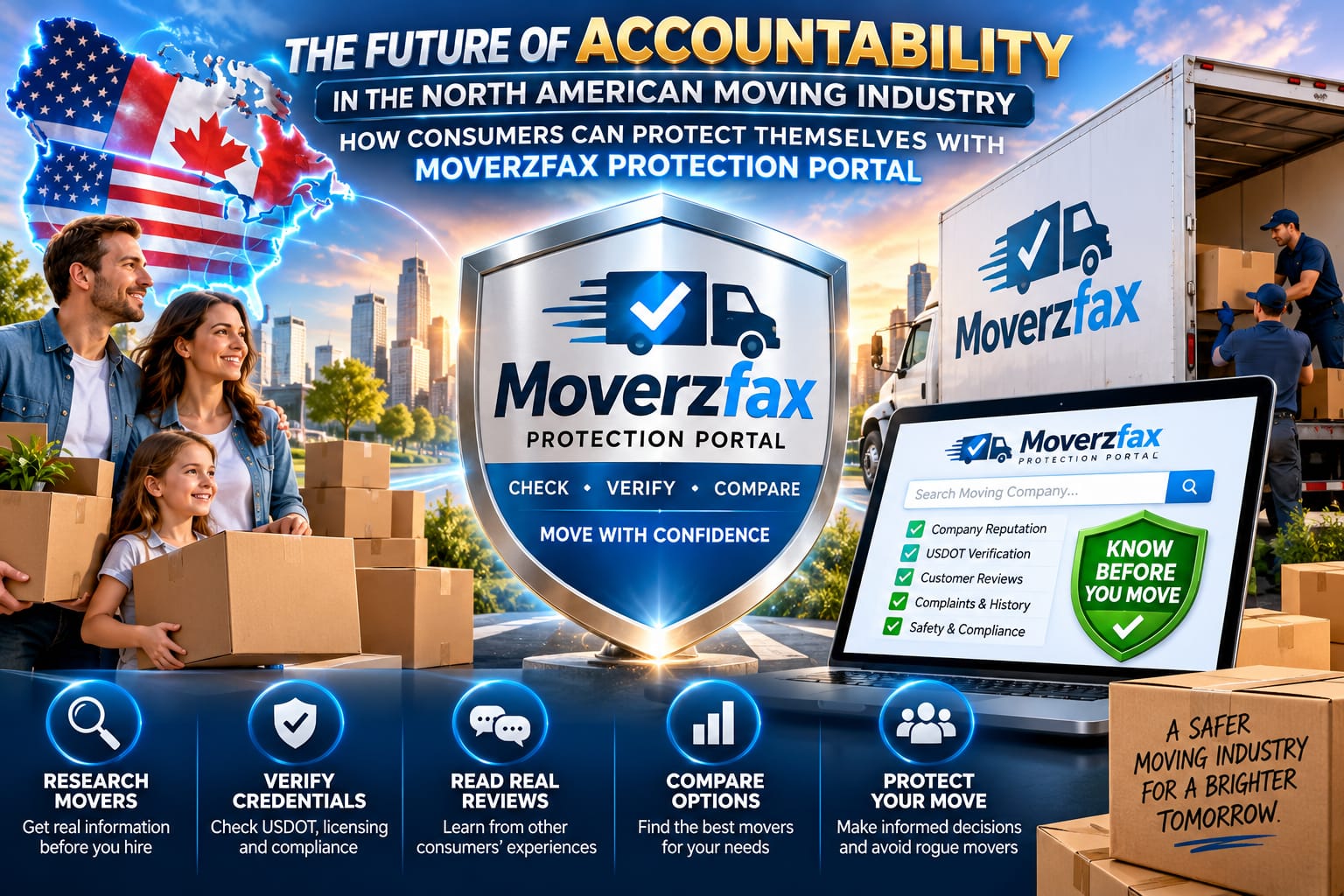
At Moverzfax, we believe consumers deserve better. Our
mission is to educate the public, raise awareness about questionable moving
practices, promote transparency, and help people make informed decisions before
trusting a company with their belongings. We believe that a professional moving
industry must be built on honesty, accountability, and respect for consumers.
And while not every moving problem is evidence of fraud or illegal activity,
consumers should never be afraid to ask questions, demand clear answers, and
investigate the companies they are considering hiring. Before you trust a
moving company with everything you own, take the time to discover who you are
really dealing with. Because sometimes the biggest mistake in a relocation
isn't choosing the wrong destination. It's choosing the wrong mover. Have you
experienced a questionable moving situation? Share your story, raise awareness,
and help other consumers avoid making the same mistake. Your experience could
make a difference.
Moverzfax – Educating Consumers. Exposing Risks. Promoting
Accountability.










No comments published yet. Be the first to share your thoughts below!
Leave a Reply