Explain lowball estimates, unexpected charges, hostage-load situations, and how consumers can protect themselves from moving-day price surprises.
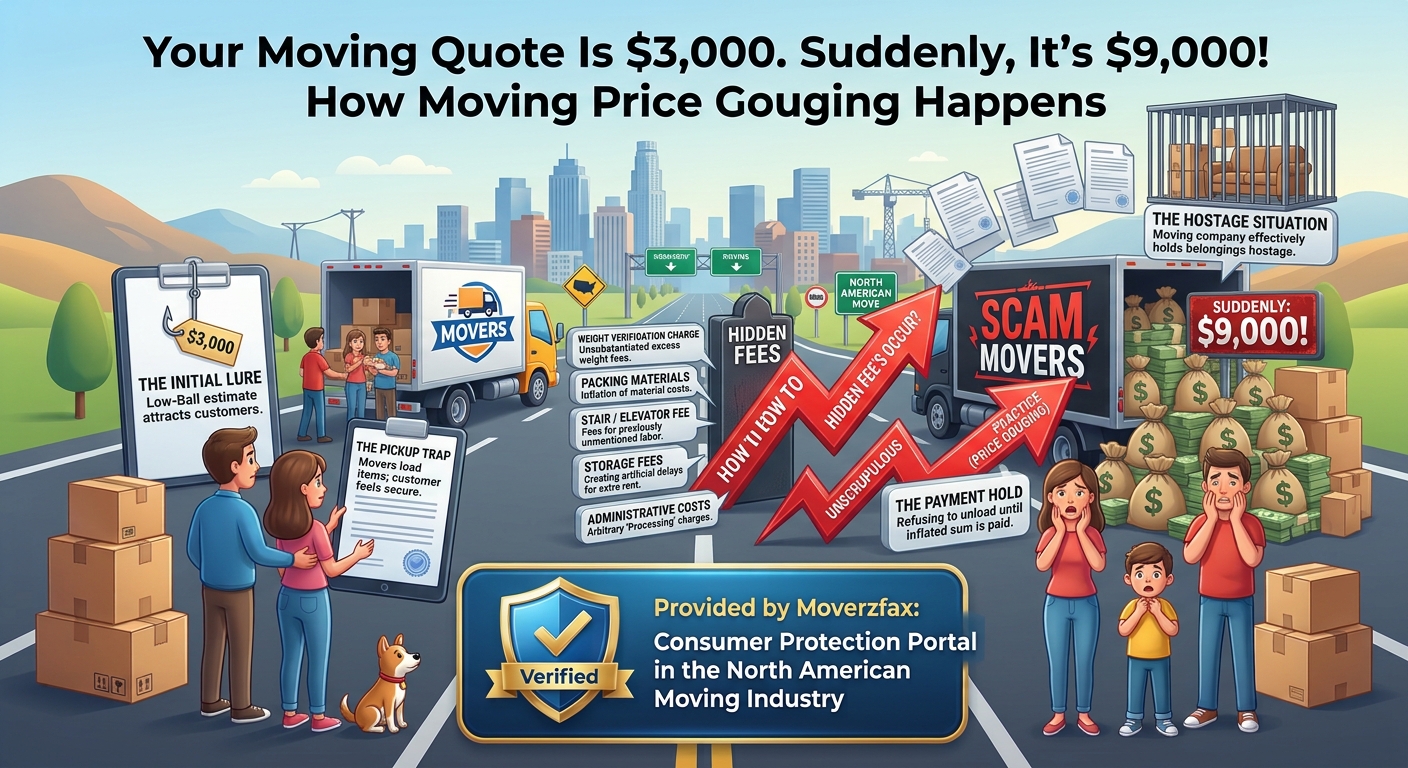
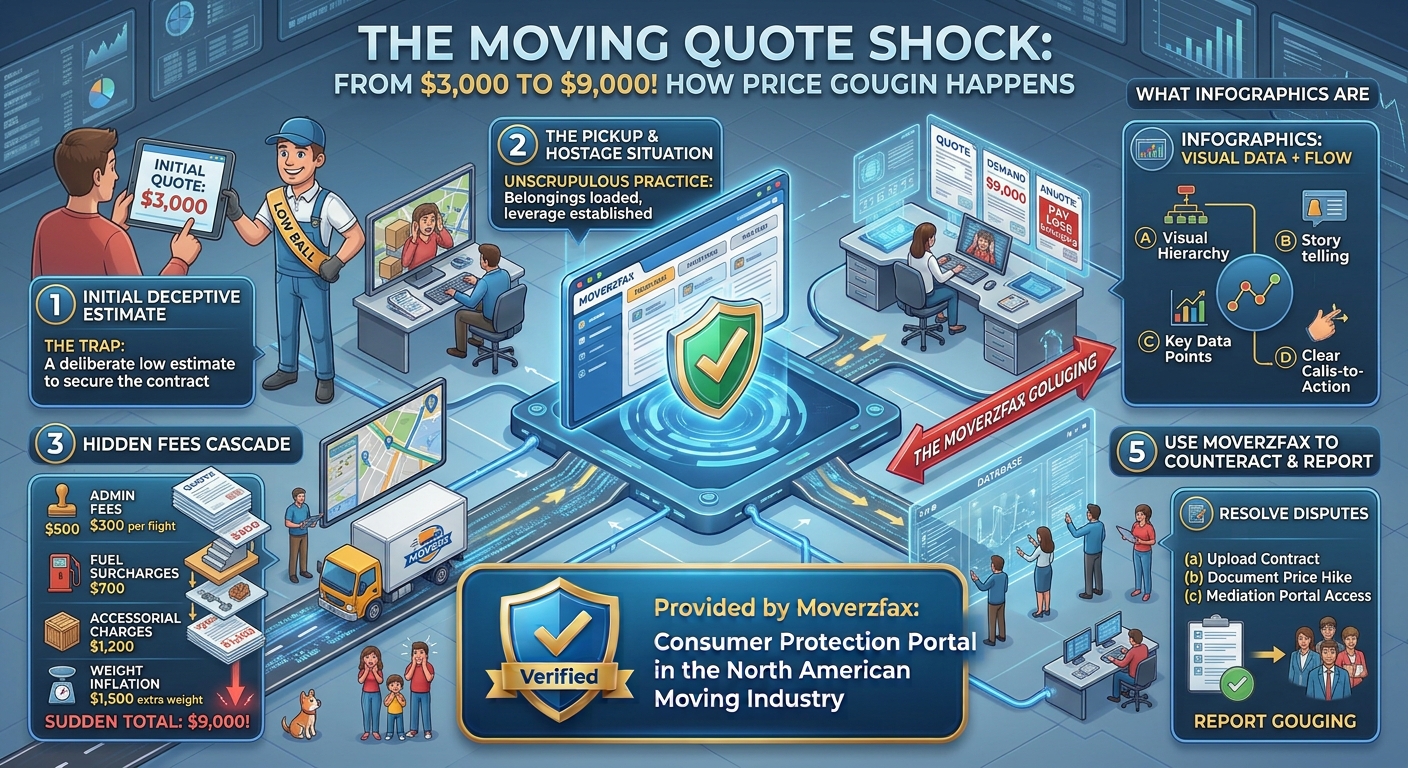
Your Moving Quote Is $3,000. Suddenly, It's $9,000! How
Rogue Movers Turn Cheap Estimates Into Expensive Nightmares
You thought you found a great deal. You compared moving
companies, received several estimates, and finally chose the one offering the
lowest price. But what happens when the moving truck arrives, your belongings
are loaded, and suddenly the price is three times higher than what you were
promised? Welcome to one of the most troubling problems consumers face in the
moving industry.
Imagine a family relocating from New
York to Florida.
After searching online, they receive a moving estimate of $3,000 from a company
with a professional-looking website and a friendly sales representative. The
price seems reasonable, and the representative assures them that everything has
been accounted for. Feeling confident, the family pays a deposit and begins
preparing for moving day. When the crew arrives, however, things start
changing. The movers claim there are more belongings than originally estimated,
additional packing materials are needed, and certain services will cost extra.
The family is told the revised price is now $5,500. With their home already
packed and their closing date approaching, they feel they have little choice
but to proceed. Then comes another surprise: before delivery, the company
demands an additional payment, bringing the total to nearly $9,000. What
started as a $3,000 moving estimate has turned into a financial nightmare.
Unfortunately, artificially low estimates followed by
unexpected charges are among the warning signs consumers should recognize when
hiring a mover. Some questionable operators use attractive prices to secure
bookings, knowing that customers may feel trapped once their belongings are
loaded. Not every price increase is fraudulent. Changes in inventory,
additional services, shipment weight, and access requirements can legitimately
affect moving costs. The problem arises when estimates are misleading,
important charges are concealed, or consumers are pressured into accepting
unexpected costs without proper explanations or documentation.
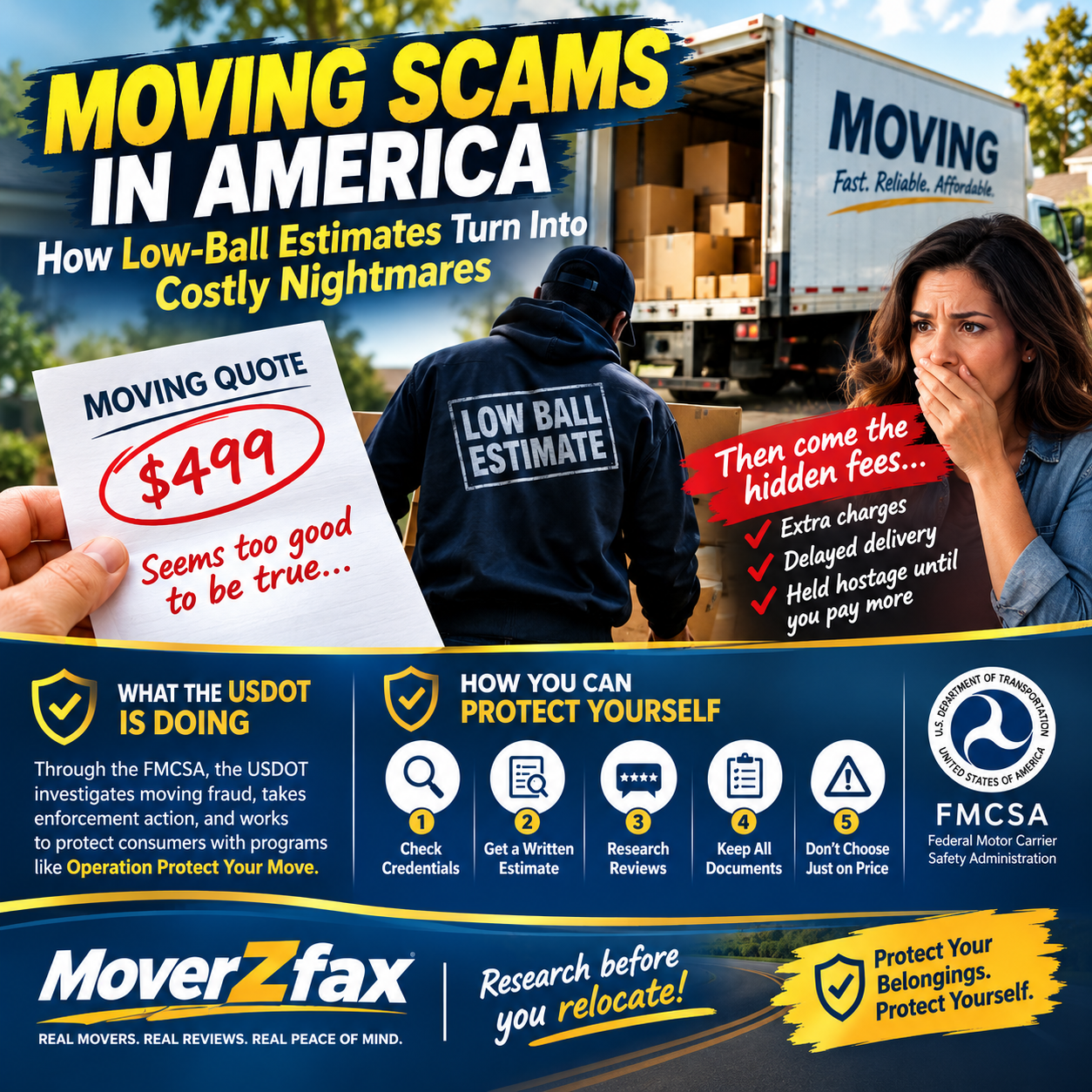
The Low-Ball Estimate: Too Good to Be True? One of the most
effective ways to attract unsuspecting customers is to offer a price
substantially lower than competing moving companies. Consumers naturally want
to save money, especially when relocation expenses are already adding up. But
consider this: if three professional movers estimate your relocation at $6,000,
$6,500, and $6,200, why is another company promising to do the same job for
$2,800? Before celebrating the bargain, ask how that price was calculated. Was
your inventory properly reviewed? Are packing, transportation, accessorial
services, and delivery included? Is the estimate binding or non-binding? A
legitimate estimate should clearly explain what you are paying for. A vague
verbal promise is not the same as a written moving estimate.
The Hostage-Load Nightmare: When Your Belongings Become
Leverage. Now imagine the family has arrived in Florida, their new home is ready, and they
are waiting for their furniture to arrive. Instead, they receive a call
informing them that the company will not release their belongings until
additional money is paid. Their beds, kitchen supplies, clothing, and personal
possessions are somewhere on a moving truck, and the family is facing an
incredibly stressful situation. This is commonly described as a hostage-load
situation. For interstate moves within the United States, federal regulations
establish specific protections governing payment and the release of household
goods. Under the rules applicable to non-binding estimates, a carrier generally
cannot require more than 110% of the estimate at delivery, subject to certain
exceptions for additional services and other permitted charges. If a qualifying
bill exceeds that amount, the remaining balance must generally be deferred.
Consumers should know these protections before moving day rather than trying to
understand them during a dispute.
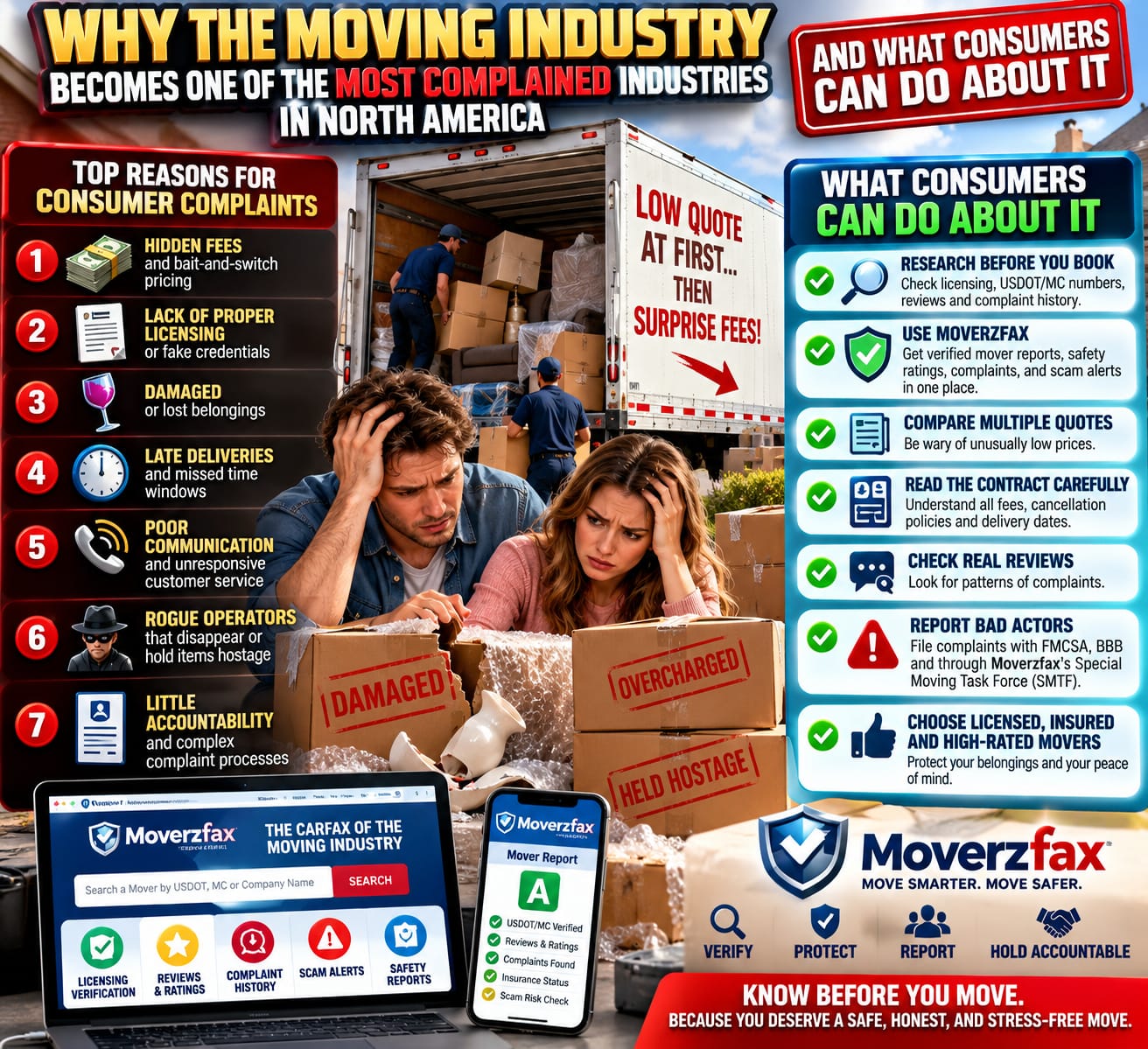
How Can You Protect Yourself? Before hiring a moving
company, insist on a written estimate based on an accurate physical or virtual
survey of your belongings. Understand the difference between a binding
estimate, which generally guarantees the price for the listed inventory and
services, and a non-binding estimate, which is not a guaranteed final price.
Ask about stairs, elevators, long carries, packing materials, storage, shuttle
services, and any other potential additional charges. Make sure the inventory
is accurate, read every document before signing, and never rely exclusively on
verbal promises. Verify the actual carrier's credentials and understand whether
you are dealing with a moving broker or the company physically transporting
your possessions. Keep copies of your estimates, contracts, payment receipts,
and communications. For interstate moves, the Federal Motor Carrier Safety
Administration (FMCSA) provides important consumer resources at
https://www.fmcsa.dot.gov/protect-your-move.
Don't Let Your Next Move Become Someone Else's Payday.
Moving should be an exciting transition, not an opportunity for dishonest
operators to take advantage of families under pressure. The reality is that
consumers often spend more time researching a new television or refrigerator
than investigating the company entrusted with transporting everything they own.
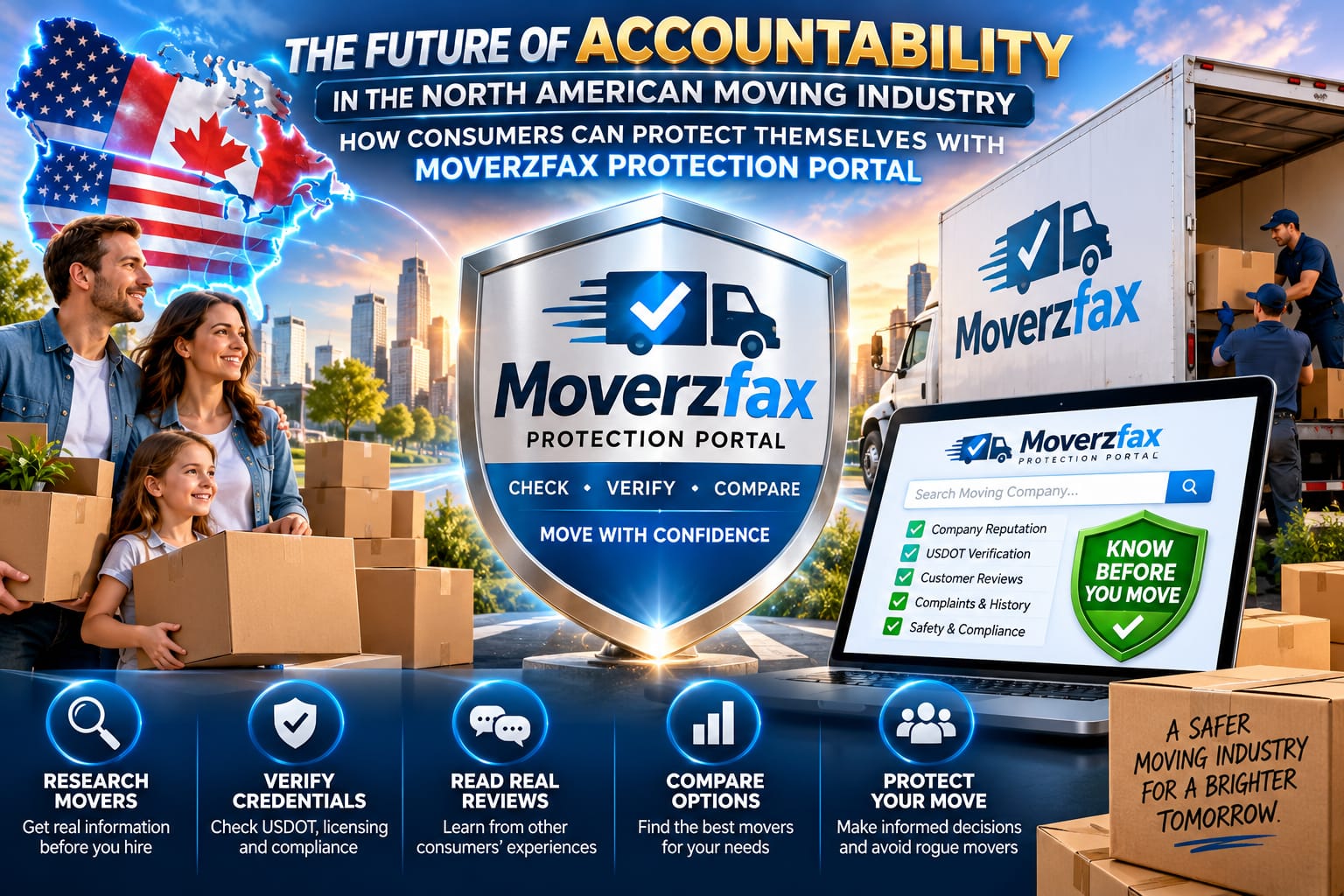
That needs to change. At Moverzfax, we believe informed consumers are
better-protected consumers. Our mission is to expose questionable moving
practices, educate the public, and promote greater transparency and
accountability throughout the North American moving industry. Before you sign a
contract, pay a deposit, or allow a crew to load your belongings, ask
questions, verify credentials, and understand exactly what you are agreeing to.
Because the biggest expense of your move might not be the price you were
quoted. It might be the price you never saw coming.
Moverzfax – Educating Consumers. Exposing Risks. Promoting
Accountability.
Have you ever received a moving estimate that suddenly
increased on moving day? Share your experience. Your story could help another
consumer avoid the same mistake.















No comments published yet. Be the first to share your thoughts below!
Leave a Reply