Explain the importance of verifying a mover's operating authority, registration, insurance, and applicable state or provincial requirements. Highlight why a professional-looking website is not proof of legitimacy.
A beautiful website. Professional uniforms. Pictures of
spotless moving trucks. Hundreds of glowing testimonials. Everything looks
legitimate. But what if the company you're trusting with your entire household
isn't legally authorized to operate the way it claims? Imagine this: A couple
is preparing for a long-distance move. They find a moving company online with
an impressive website, a friendly sales representative, and an attractive
estimate. The company promises professional service, reliable delivery, and
complete peace of mind. Without thinking twice, they pay a deposit and schedule
their move. Moving day arrives, and everything initially appears normal. The
crew shows up, loads the furniture, and drives away. But days later,
communication becomes difficult. Delivery keeps getting delayed, additional
charges appear, and nobody seems willing to provide clear answers. The couple
begins investigating the company and discovers something alarming: The business
information they relied on doesn't match the actual transportation company
handling their shipment. Questions about operating authority, insurance, and
responsibility suddenly become impossible to ignore. What looked like a
professional moving operation may have been anything but. Unfortunately,
consumers can encounter situations like this when they assume that a
professional-looking website automatically means a company is legitimate.
A Website Is Not a License
In today's digital world, almost anyone can create a
convincing business website. Professional photographs, impressive slogans,
customer testimonials, and online advertising can make a company appear
established and trustworthy. But here's the problem: A website cannot establish
whether a moving company is legally authorized to transport your belongings.
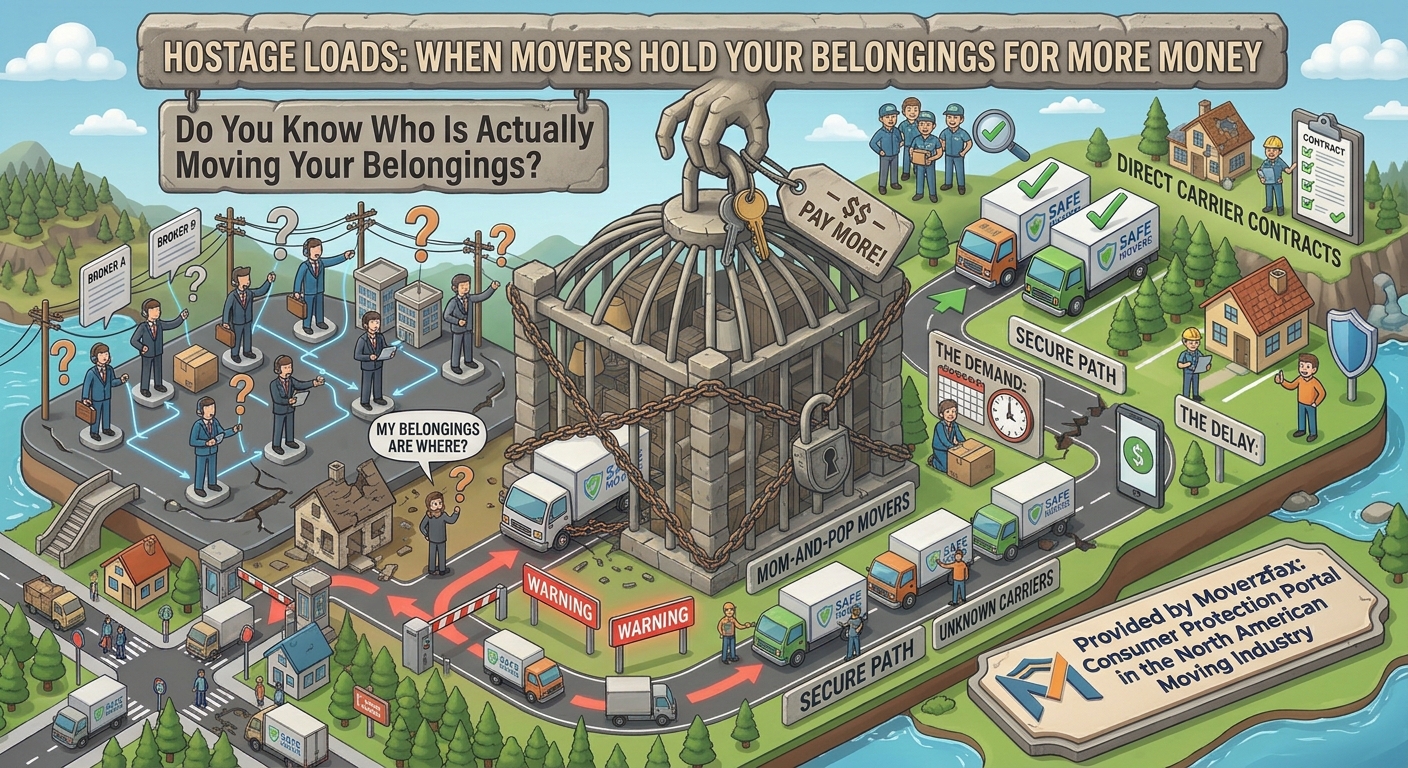
Some businesses operate as brokers, arranging transportation through other
moving companies. This is not automatically illegal or unethical. However,
consumers need to understand whether they're hiring a carrier that physically
transports their belongings or a broker that arranges the move with another
company. Imagine booking with a company whose website promises its own
professional moving crews, only to discover that an entirely different carrier
arrives on moving day. Who is responsible for your shipment? Who handles
claims? Who should you contact if something goes wrong? These are questions
consumers should ask BEFORE signing a contract or paying a deposit.
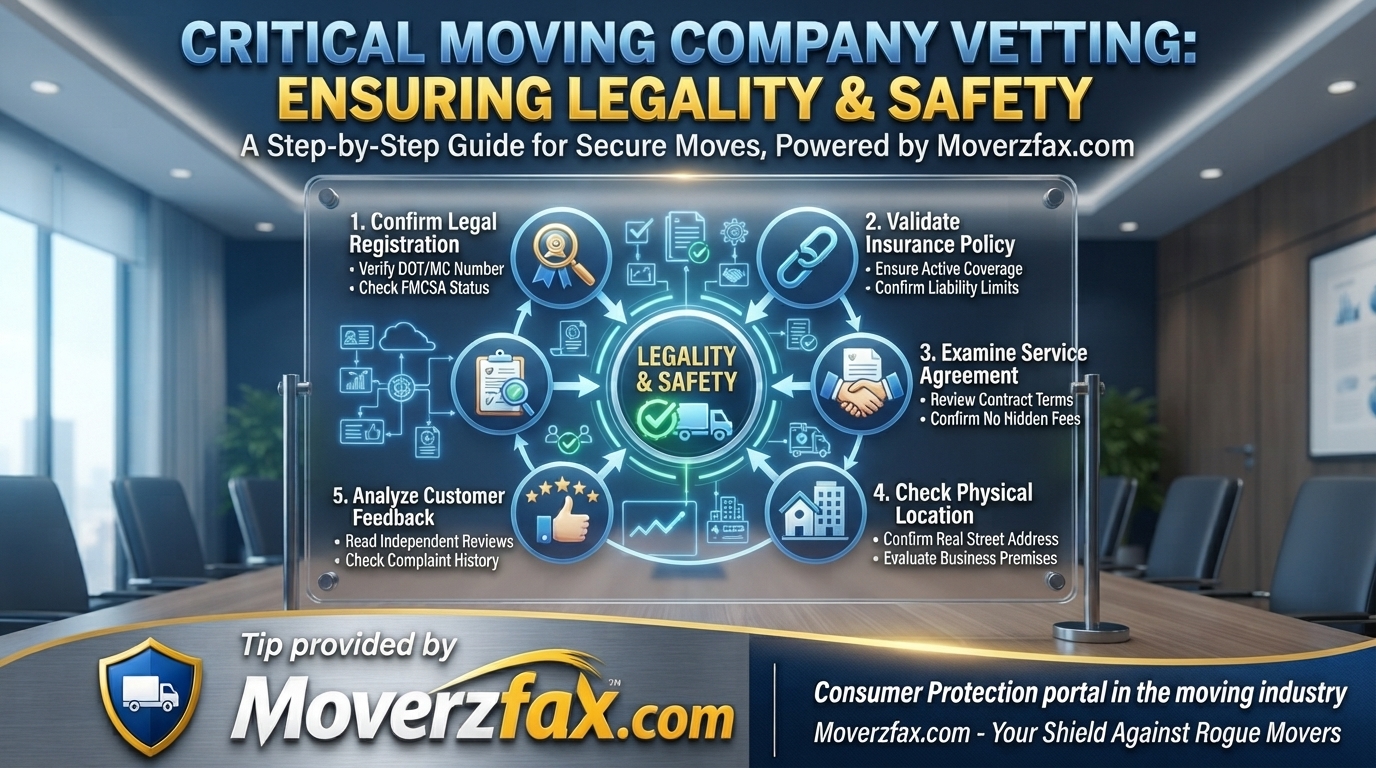
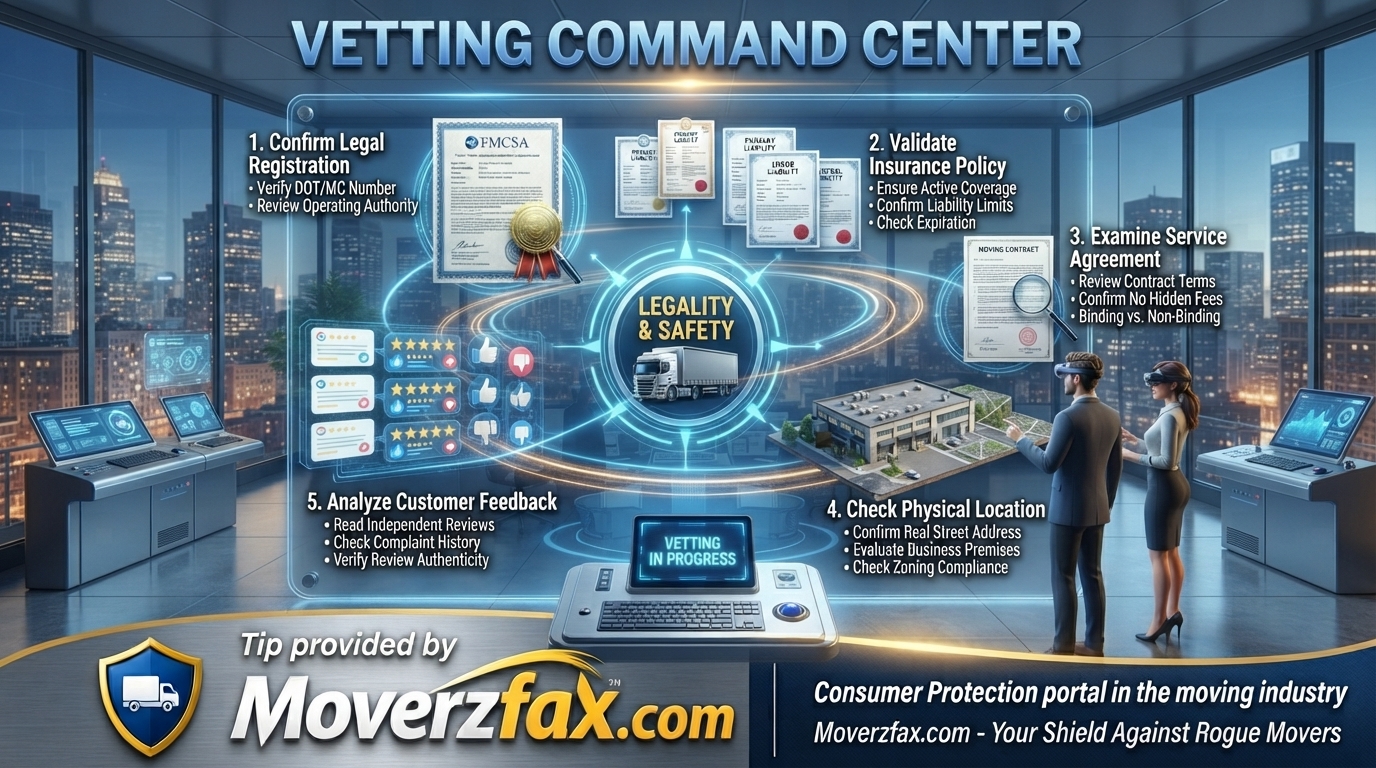
Operating Authority and Registration: What Should You Check?
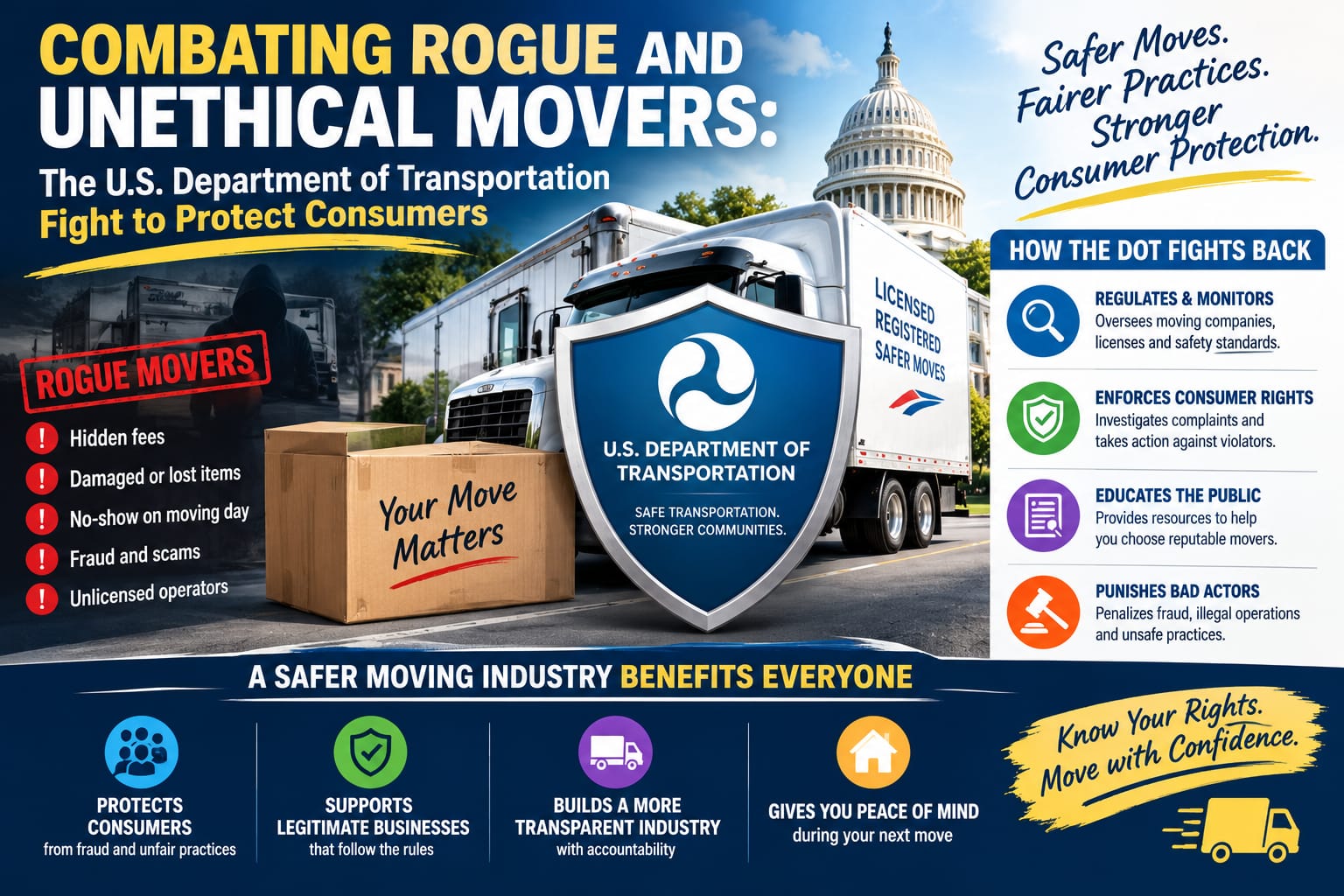
For interstate moves within the United States, moving companies
generally need appropriate federal registration and operating authority through
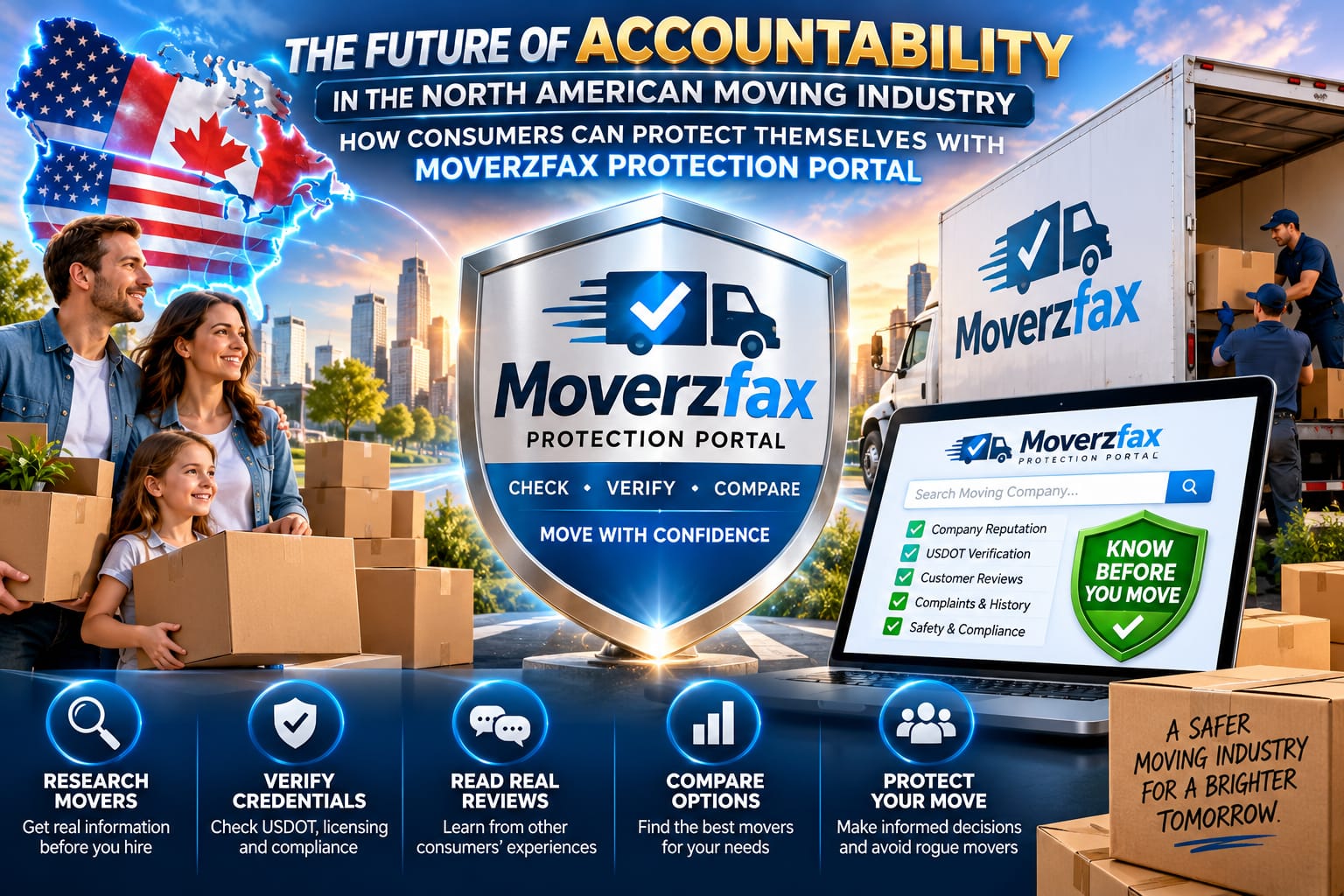
the Federal Motor Carrier Safety Administration (FMCSA). Consumers can use the
FMCSA's official database, <Link url="https://www.fmcsa.dot.gov/protect-your-move"
title="Protect Your Move"/>, to research movers, verify
registration information, and review available complaint and safety
information. Pay attention to the company's legal name, USDOT number, operating
authority, and whether its registration matches the business you're actually
hiring. A company advertising under one name while operating under a different
legal identity deserves additional investigation. Don't assume two businesses
are the same simply because their websites, phone numbers, or branding look
similar. For interstate household goods brokers, verify that the company has
the appropriate broker authority as well.
Insurance: Are You Really Protected?
Another common misconception is that every moving company
advertising insurance is adequately covered for every situation. Consumers
should understand the difference between required financial responsibility,
cargo-related insurance requirements, and valuation protection offered for
household goods. For interstate moves, federal requirements apply to carriers
and brokers according to their operating roles. However, having the necessary
registration or insurance filings does not automatically mean every damaged or
missing item will be fully reimbursed. Before hiring a mover, ask what protections
are available, what valuation options are offered, who handles claims, and what
limitations or exclusions apply. A professional representative should be able
to explain these details clearly rather than simply saying, "Don't worry,
everything is insured."
State and Provincial Requirements Matter Too
Not every move falls under the same regulations. Interstate
moves in the United States
generally fall under federal transportation requirements, while intrastate
moves may be regulated by individual states. Some states require additional
licenses, registrations, insurance, or permits. In Canada, provincial and territorial
requirements can differ, particularly for local and interprovincial
transportation. This means consumers should never assume that a company
authorized to operate in one location automatically meets every requirement in
another. If you're moving across state or provincial lines, ask which company
will physically transport your belongings and verify that it meets the
requirements applicable to that shipment.
The Red Flags Consumers Should Never Ignore
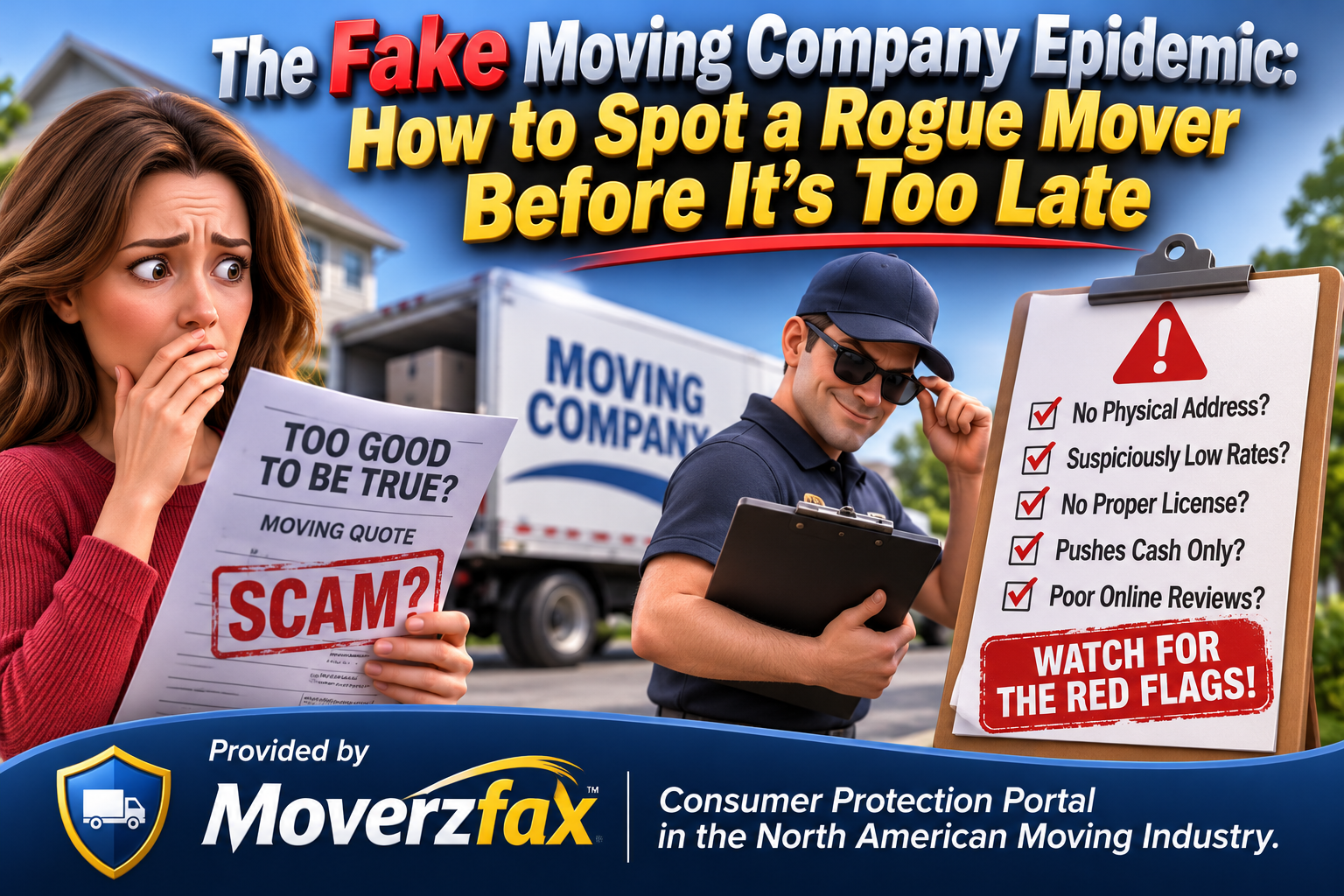
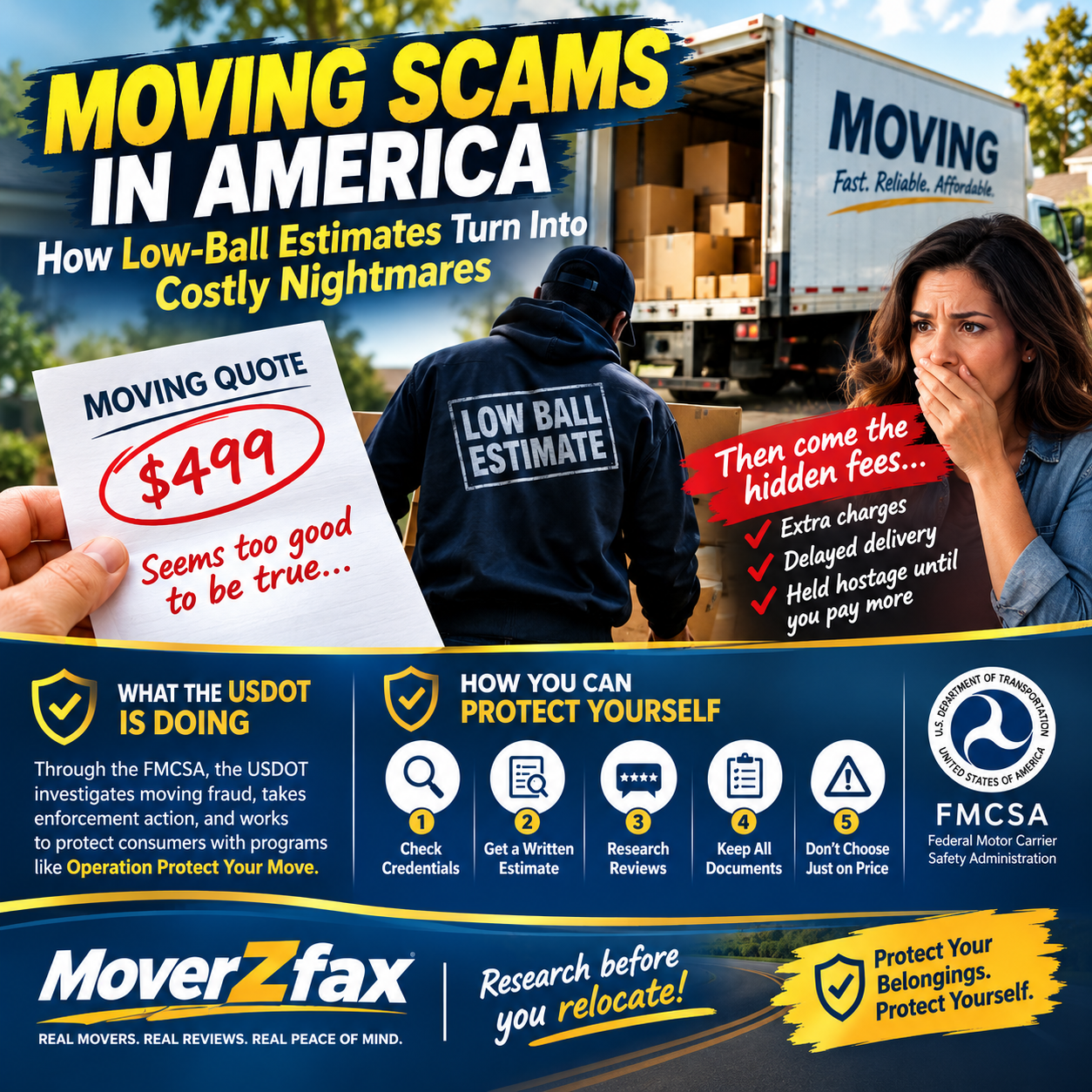
Consider another family that discovers a mover through an
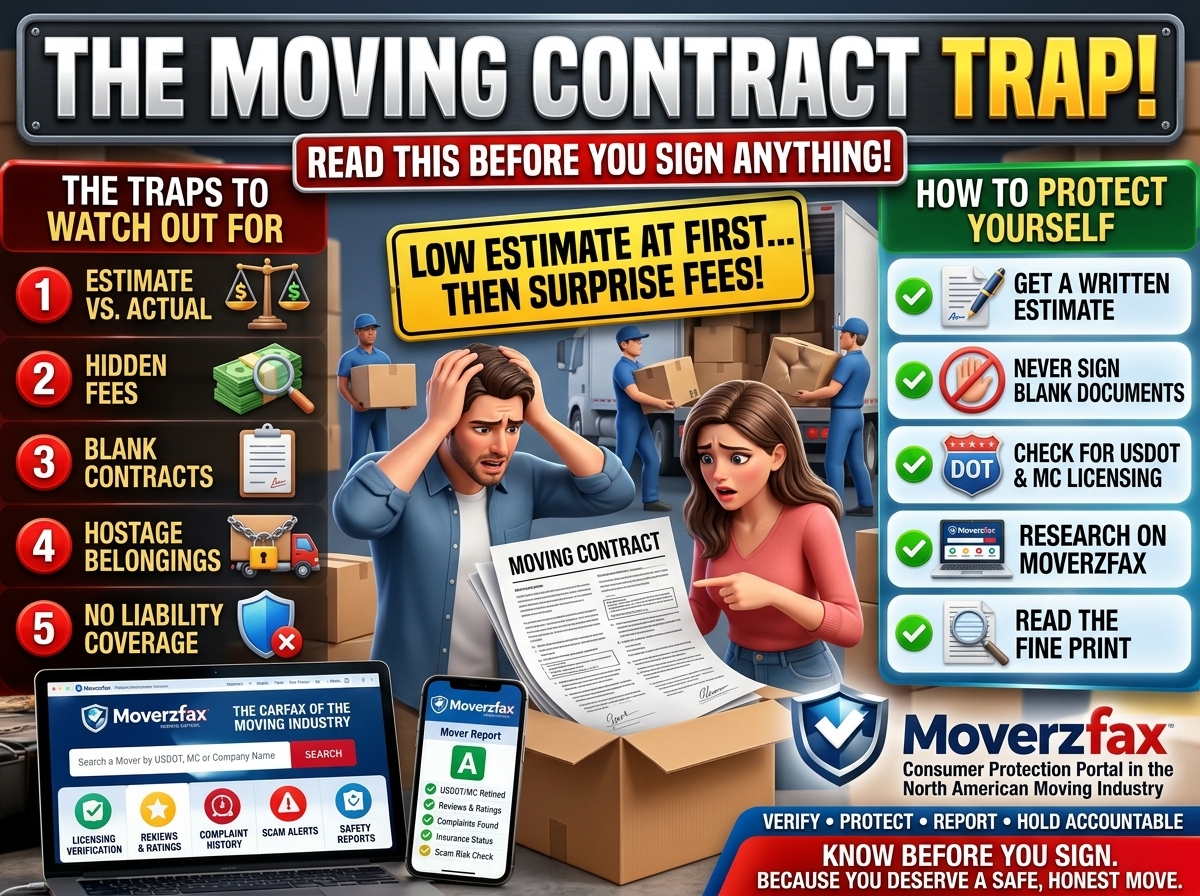
online advertisement. The representative refuses to provide a USDOT number,
pressures them to pay a deposit immediately, and insists that all the necessary
paperwork will be provided later. The family is hesitant but doesn't want to
lose its moving date. Unfortunately, pressure tactics, inconsistent company
information, unexplained changes in the carrier's identity, and reluctance to
provide registration details are all reasons to slow down and investigate. A
legitimate business should not be offended by reasonable questions about its
credentials. Before committing, verify the company independently, confirm who
is responsible for the move, request written documentation, and make sure the
legal business identity matches the paperwork.
Don't Let Appearance Replace Accountability
Your household belongings represent years of memories, hard
work, and financial investment. Choosing a moving company should involve more
than comparing prices, browsing photographs, and counting five-star reviews. A
professional website can be created overnight. A legitimate transportation
operation requires proper authorization, compliance, and accountability. Now we
want to hear from YOU! Have you ever hired a moving company that looked
completely legitimate online but turned out to be something very different? Did
the company use another carrier without clearly explaining it? Did you discover
licensing issues, questionable insurance claims, or business information that
didn't add up? Share your experience in the comments. Your story could help
another consumer avoid a costly mistake. Remember: Don't just check whether a
moving company looks professional. Check whether it's legally qualified to do
the job. Verify first. Sign second. Move with confidence.

















No comments published yet. Be the first to share your thoughts below!
Leave a Reply