The Future of Accountability in the Moving Industry: How Consumers Can Protect Themselves with MoverzFax
Visual Infographic
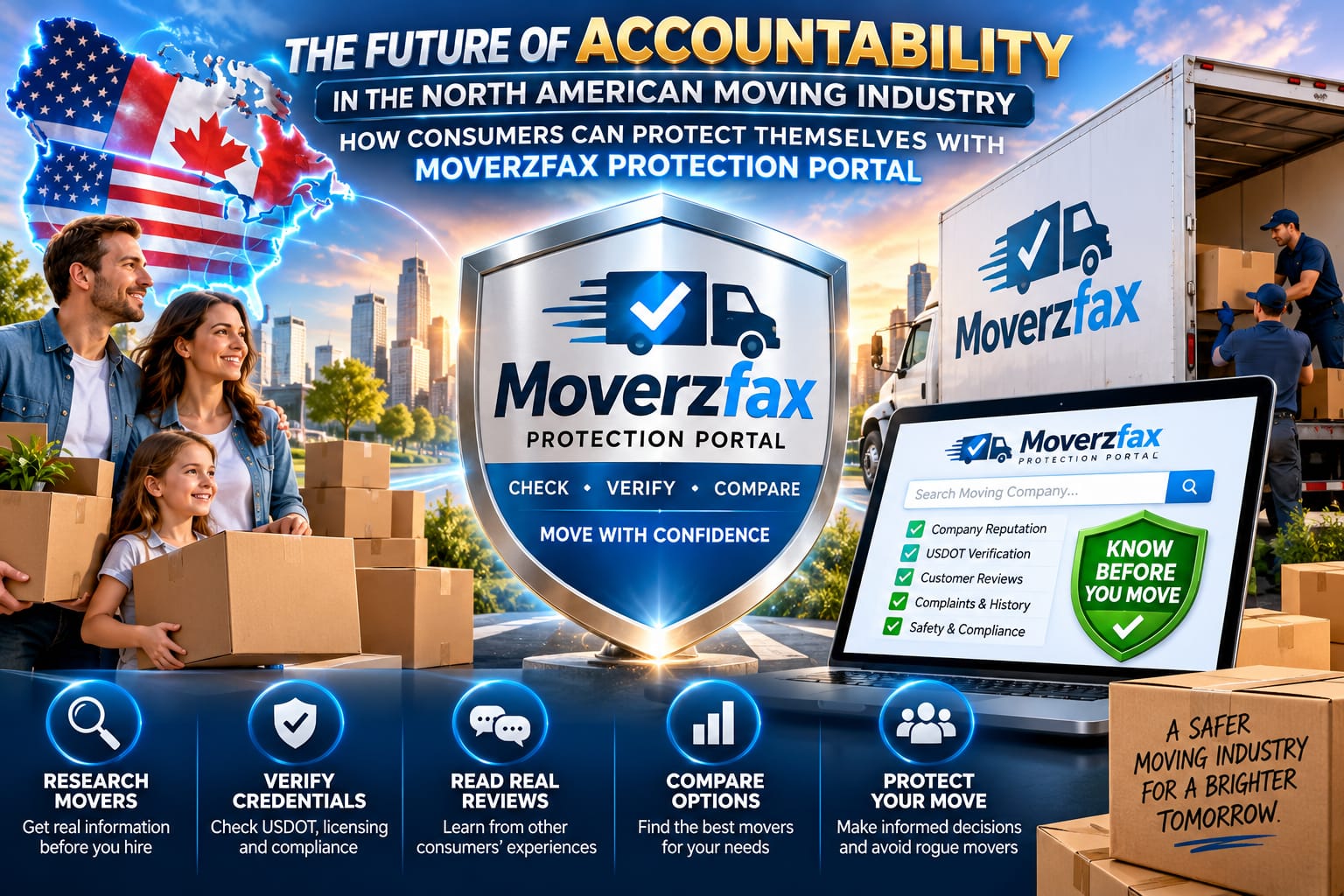
Click on the image below to expand and view full size infographic.
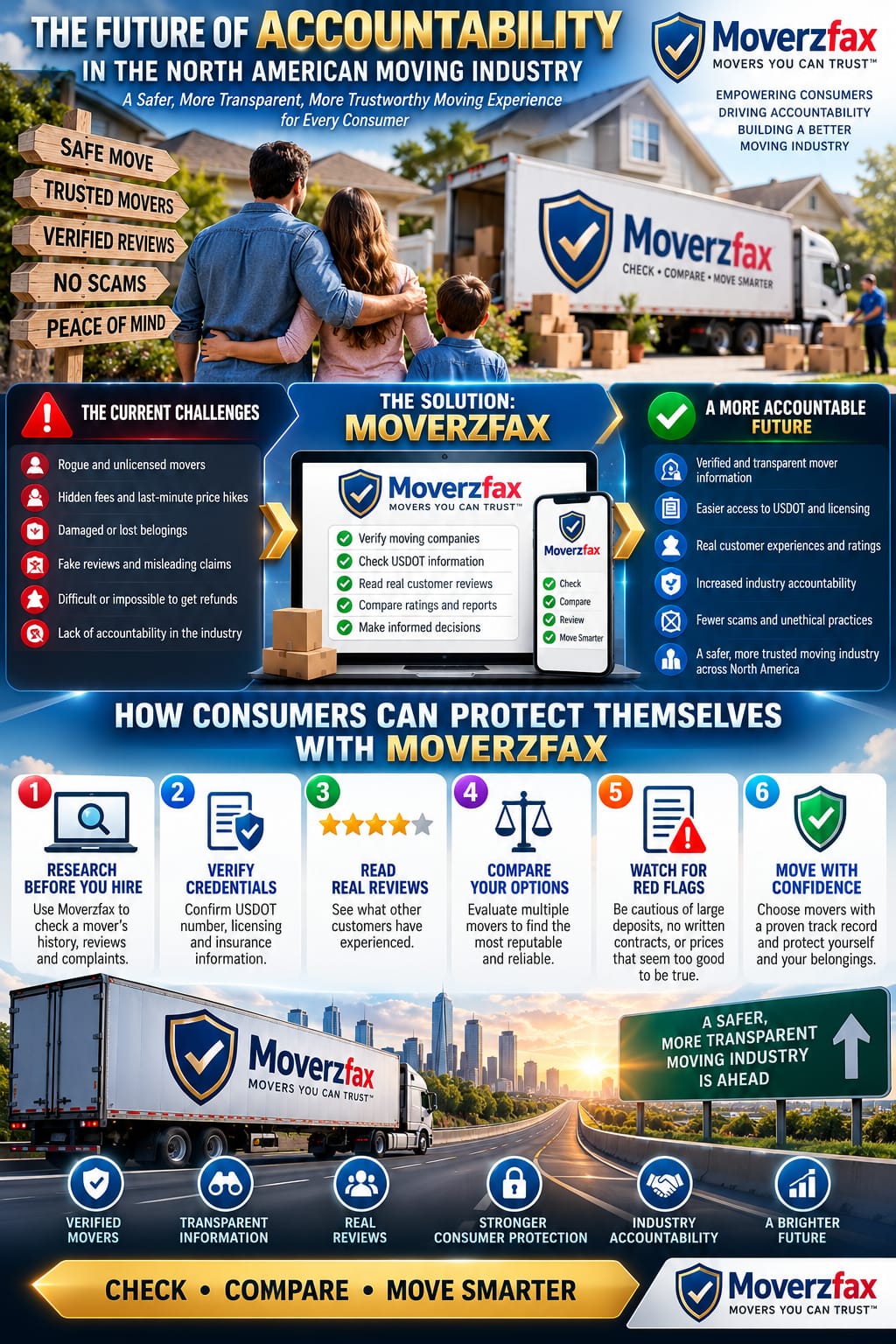
The moving industry is entering an era in which transparency, accountability, and consumer protection are becoming more important than ever. For decades, consumers have faced challenges ranging from hidden fees and misleading estimates to damaged belongings, last-minute price increases, and fraudulent moving operations. As awareness of these practices grows, the demand for meaningful reform is reshaping expectations for moving companies and the customers they serve.
The future of moving must be built on trust, verifiable information, and consequences for unethical behavior. With greater regulatory oversight, improved access to company records, and consumer-focused resources such as MoverzFax, the industry has an opportunity to move toward a more accountable and transparent business model.
Upcoming Changes: A More Transparent Moving Industry
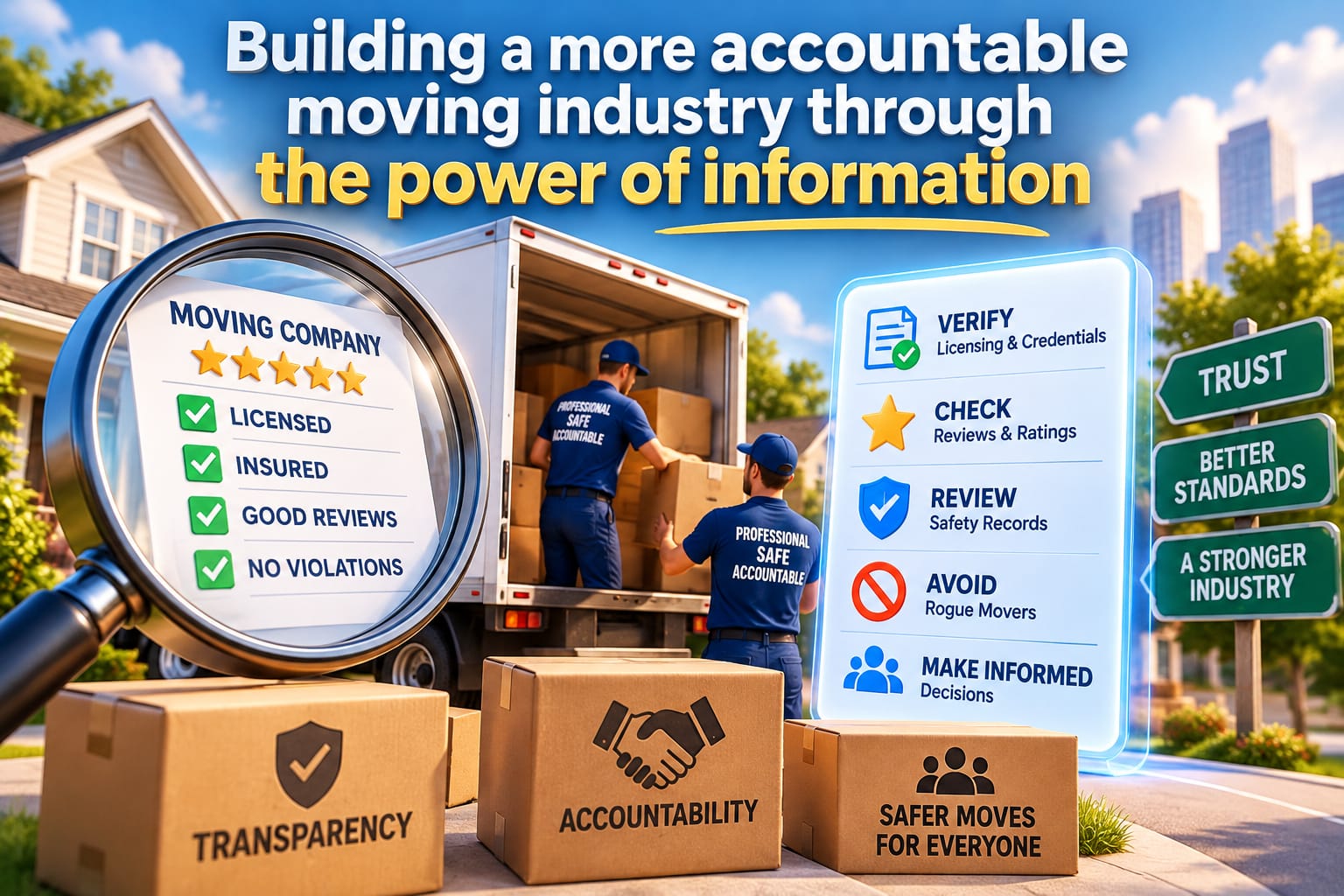
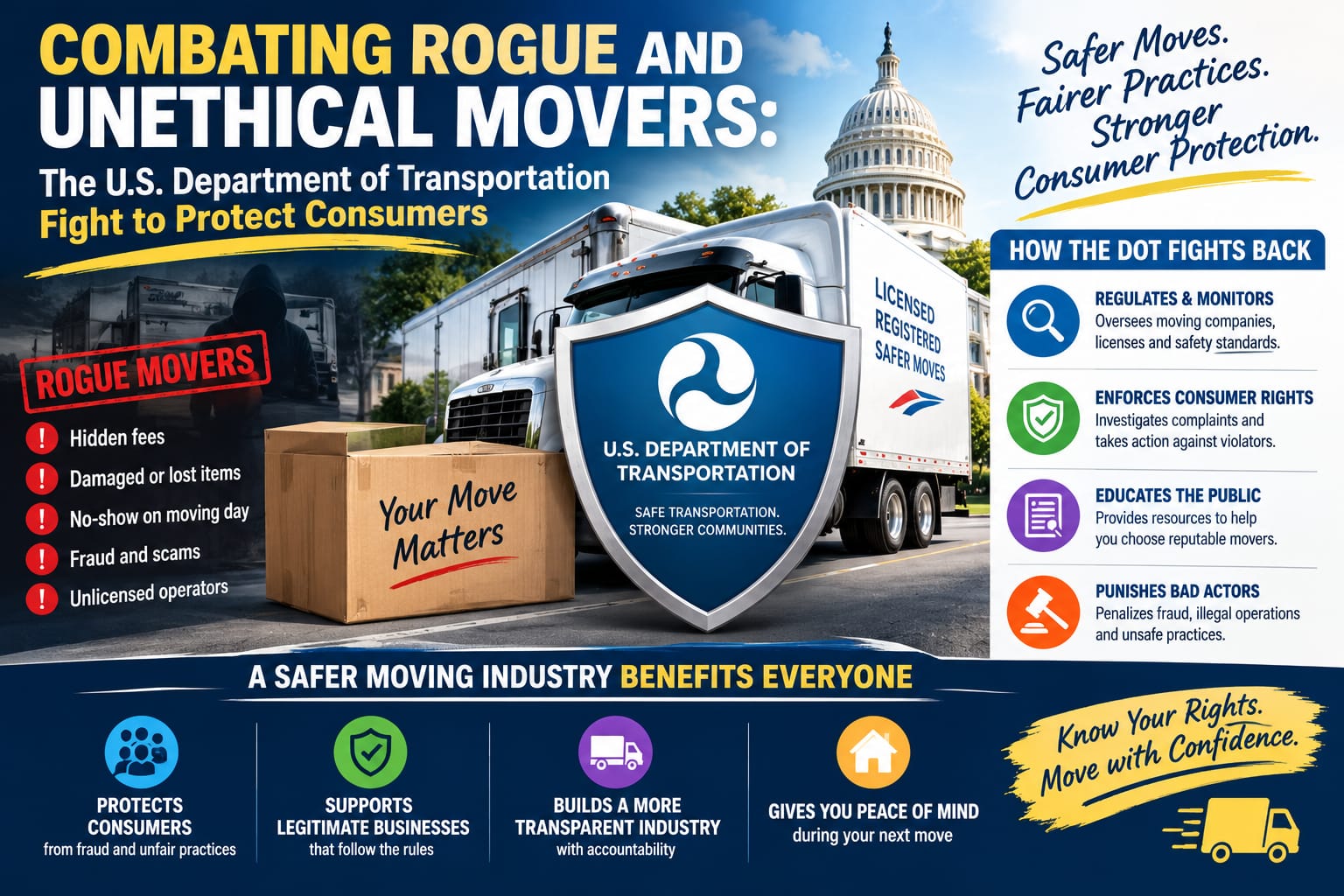
One of the most significant developments consumers should expect is increased scrutiny of moving companies. Regulatory agencies, consumer advocacy organizations, and industry stakeholders continue to emphasize the importance of legitimate business credentials, accurate estimates, clear contracts, and fair dispute-resolution practices. For interstate movers in the United States, federal requirements already establish important standards. The Federal Motor Carrier Safety Administration (FMCSA) oversees interstate household goods movers, including registration requirements and consumer protection rules. Consumers can use publicly available information to check a mover's registration status, complaint history, and other relevant business details.
Looking ahead, greater digital accessibility and more informed consumers are likely to place additional pressure on moving companies to demonstrate their legitimacy before earning a customer's business. Online reviews, public records, complaint databases, and independent verification tools can help expose concerning patterns and make it harder for unethical operators to hide behind polished websites and persuasive sales pitches.
However, meaningful accountability requires more than new technology or increased awareness. It also depends on consistent enforcement, accurate reporting, and consumers knowing how to use the information available to them.
Movers Must Be Held Responsible for Unethical Practices
A moving company should not be allowed to benefit from misleading customers, disregarding contractual obligations, or taking advantage of people during one of life's most stressful transitions. Consumers deserve honest estimates, transparent pricing, professional handling of their belongings, and timely communication throughout the moving process.
Unethical practices can include bait-and-switch pricing, deceptive advertising, unexplained additional charges, failure to deliver possessions as agreed, mishandling of property, and misrepresentation of licensing or insurance credentials. Particularly concerning are situations in which customers face unexpected demands for substantially higher payments while their belongings remain in a mover's possession.
Accountability means that these practices must have consequences. Movers should be expected to maintain accurate records, honor applicable contracts, explain charges clearly, respond to legitimate complaints, and comply with federal and state regulations. When misconduct occurs, consumers should have accessible ways to document their experiences, pursue claims, and report potential violations to the appropriate authorities.Companies that consistently operate ethically should benefit from a marketplace where their professionalism distinguishes them from businesses that cut corners. Ultimately, accountability protects consumers while rewarding responsible movers who prioritize service and integrity.
Consumer Vigilance: Your Best Defense Against Moving Scams
Although regulations and enforcement play essential roles, consumers also have an important part to play. The best protection begins before signing a contract or paying a deposit.
Here are several steps every consumer should consider:
Verify credentials. For interstate moves, check the company's USDOT registration information through the FMCSA. For intrastate moves, consult the appropriate state regulatory agency.
Investigate the company's history. Review complaints, customer feedback, business records, and available enforcement information. Look for recurring patterns rather than relying on a single review.
Demand written estimates. Understand whether an estimate is binding or nonbinding, what services it covers, and which circumstances may affect the final price.
Read every document. Review the contract, inventory, valuation coverage, payment terms, cancellation policies, and procedures for reporting damage or loss.
Watch for red flags. Be cautious of unusually low quotes, high-pressure sales tactics, vague company information, requests for unexplained payments, or refusal to provide written documentation.
Keep a paper trail. Save emails, text messages, advertisements, estimates, receipts, photographs, and signed agreements. Documentation can be essential if a dispute arises.
Consumers should remember that no single review, registration check, or online tool guarantees a safe move. The strongest approach combines independent verification, careful documentation, and informed decision-making.
How MoverzFax Can Help Consumers Make Informed Decisions
MoverzFax can play a valuable role in a more accountable moving ecosystem by helping consumers investigate movers and make better-informed decisions before entrusting a company with their belongings.
Rather than relying solely on a mover's promises or marketing materials, consumers can use MoverzFax as part of their due-diligence process to seek relevant information, identify potential warning signs, and evaluate a company's background before committing to a move. Its value lies in encouraging consumers to ask questions, verify claims, and approach the hiring process with greater confidence.
For maximum protection, consumers should use MoverzFax alongside official regulatory resources, written estimates, independent reviews, and direct confirmation of licensing and insurance where applicable. Any information uncovered should be evaluated carefully, and allegations should be distinguished from verified findings.
The broader opportunity is significant: when consumers have better access to information, moving companies face stronger incentives to operate transparently and responsibly.
Building a Future Where Accountability Is the Standard
A more accountable moving industry will not emerge overnight. It will require effective enforcement, responsible business practices, accessible information, and consumers who refuse to overlook warning signs.Moving companies must understand that trust is earned through honest conduct, not simply advertising. Consumers, meanwhile, must recognize that protecting their belongings begins long before moving day.With greater vigilance, independent verification, and tools such as MoverzFax, consumers can make more informed choices and help create a marketplace where transparency matters and unethical behavior is harder to conceal.The future of moving should not depend on taking a company's word for it. It should depend on verifiable facts, responsible service, and accountability at every step.
Check Mover Legitimacy
Before hiring any mover, verify their USDOT registration and safety history report.
Search Mover Now