Educate consumers about binding and non-binding estimates, inventories, valuation coverage, additional charges, delivery windows, and contractual obligations.
You found a moving company, received what sounds like a
reasonable quote, and finally feel like your move is under control. But have
you read the contract? Because the biggest moving-day surprises don't always
happen when the truck arrives. Sometimes, they begin with the signature you put
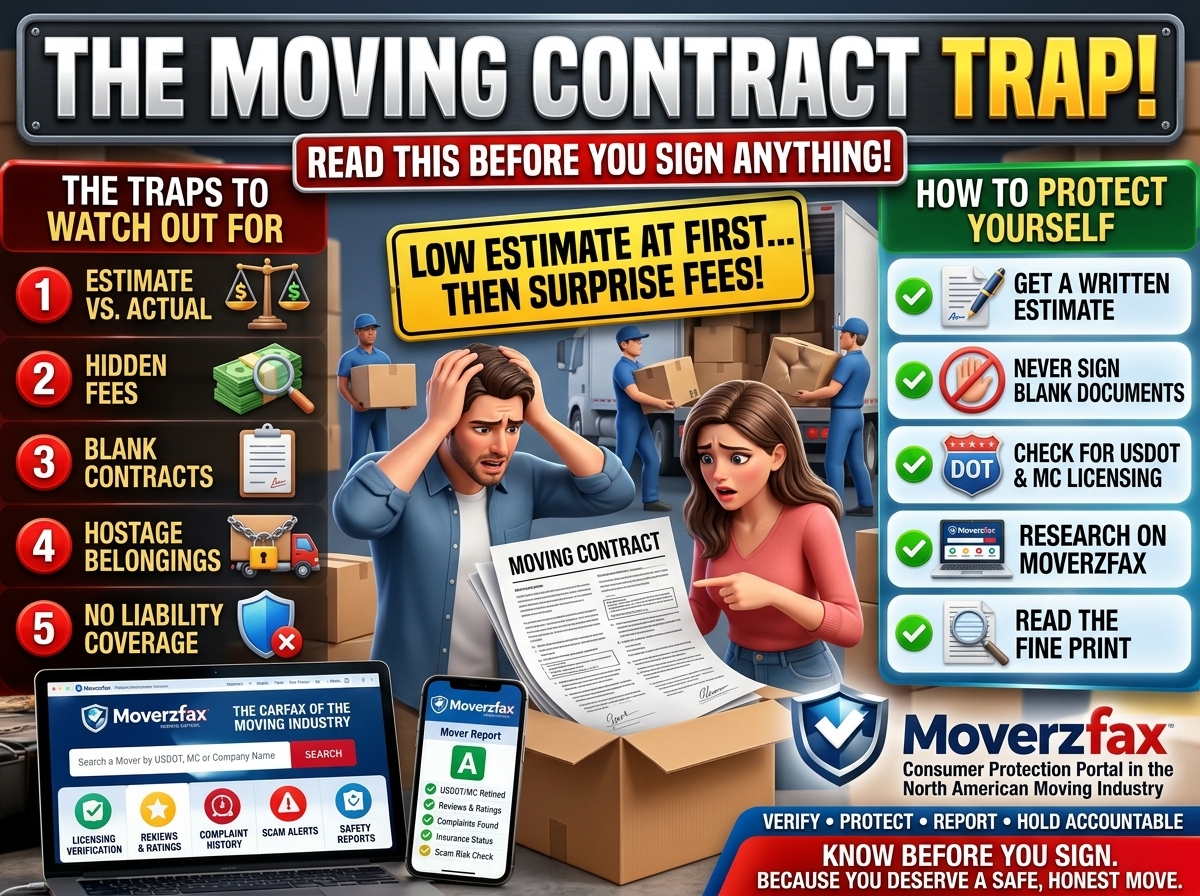
on a document weeks earlier. Imagine this scenario: A family is preparing for a
long-distance move. They contact several companies, compare prices, and choose
the one offering the most attractive estimate. The representative is friendly,
the price sounds affordable, and the paperwork seems routine. With so much to
organize, they quickly sign and move on to packing. Moving day arrives. The
movers load the household goods, and suddenly the family is informed that the
shipment weighs more than expected. Additional charges are added. The original
estimate no longer reflects the amount they are expected to pay. When they
question the difference, they're told they agreed to the terms in the contract.
Now they're facing an uncomfortable choice: pay more than anticipated or deal
with the possibility of their belongings being held while the dispute
continues. Unfortunately, situations like this are why understanding your
moving contract BEFORE signing is so important.
1. Binding vs. Non-Binding Estimates: Do You Know the
Difference?
Not all moving estimates offer the same price protection. A
binding estimate generally establishes the agreed price for the listed services
and inventory, provided the circumstances and services remain consistent with
the agreement. Additional services or changes may result in additional charges
under applicable rules and contract terms. A non-binding estimate, on the other
hand, is an approximation, not a guaranteed final price. The actual charges may
be higher or lower depending on the shipment's actual weight and applicable
services. Imagine budgeting $4,500 for your move based on a non-binding
estimate, only to discover that the final amount is substantially higher. If
you never understood the type of estimate you signed, you may find yourself in
a difficult financial position. The lesson: Ask which type of estimate you're
receiving, how the final price is calculated, and what circumstances can change
the amount.
2. The Inventory: What's Actually Being Moved?
Your household inventory is more than a list of boxes and
furniture. It can directly affect your moving costs and the terms of your
agreement. Consider a customer who receives an estimate based on a
three-bedroom home but forgets to mention the garage, storage unit, patio
furniture, and several large appliances. When the movers arrive, the shipment
is considerably larger than anticipated. The company may need to revise the
estimate or apply additional charges for services not included in the original
agreement. Before signing, make sure your inventory is accurate. Review the
items, quantities, large furniture, special handling requirements, and any
services that may affect the price. Keep a copy of the inventory and any
revisions.
3. Valuation Coverage: Are Your Belongings Really Protected?
Here's something many consumers don't discover until something
breaks: moving company valuation coverage is not necessarily the same as
traditional replacement-value insurance. For interstate moves, federal
regulations generally require movers to offer two levels of liability
protection: Full Value Protection and Released Value Protection. Released Value
Protection typically provides minimal protection based on weight, generally 60
cents per pound per article. Imagine a 50-pound television worth $1,500 being
damaged. Under this option, the applicable basic liability amount could be just
$30. Full Value Protection generally provides broader protection, subject to
the mover's terms, applicable deductibles, and exclusions. Before signing, ask
what coverage is included, what additional protection costs, how claims are handled,
and what limitations apply. Don't assume your belongings are automatically
protected for their full purchase value.
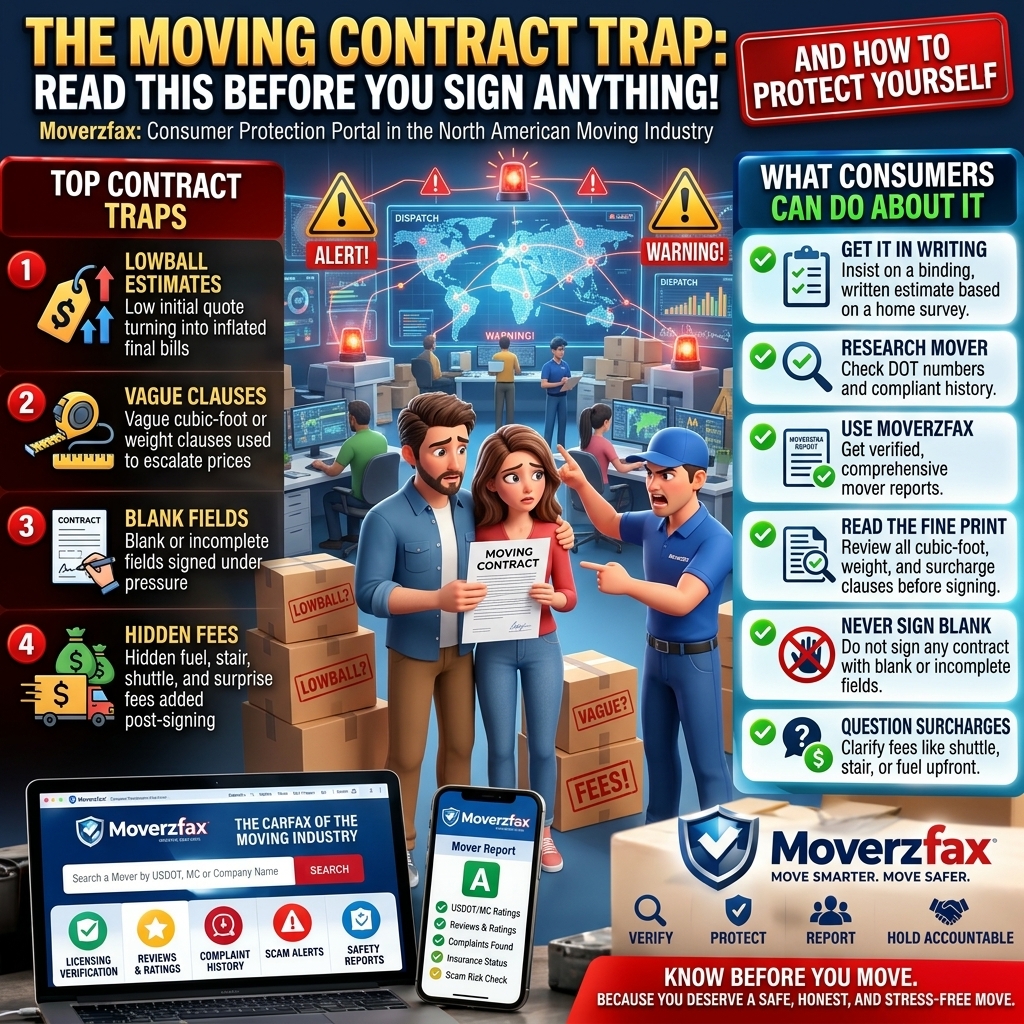
4. Additional Charges: The Fine Print Can Get Expensive
A low estimate can quickly become an expensive move when
additional services aren't clearly explained. Examples include:
Long-carry fees when movers cannot park close enough to the
residence.
Stair or elevator charges.
Shuttle services when a large moving truck cannot access the
property.
Packing materials and professional packing services.
Storage, re-delivery, or additional handling fees. Picture a
customer who lives in a condominium. The estimate never clearly addresses
elevator reservations, restricted truck access, or shuttle requirements. On
moving day, additional charges appear, leaving the customer questioning why
these costs weren't discussed earlier. Ask for every foreseeable additional
charge in writing. If something is unclear, get an explanation before signing.
5. Delivery Windows: When Will Your Belongings Actually Arrive?
For long-distance moves, delivery dates can be especially
important. You may have a new home waiting, a job starting, children returning
to school, or temporary housing arrangements that depend on receiving your
belongings. A customer might be told their furniture will arrive Friday,
arrange their entire schedule around that promise, and then discover the
contract provides a broader delivery window. Read the delivery provisions
carefully. Understand whether the date is guaranteed or estimated, how the
delivery spread works, what happens if delivery is delayed, and whether
compensation or other remedies are available under the agreement. Never rely
solely on a verbal promise when the written contract says something different.
6. Your Signature Means Something
Before signing, take time to review the complete agreement,
including the estimate, inventory, order for service, bill of lading, valuation
selection, payment terms, cancellation provisions, and any additional service
agreements. For interstate moves, the bill of lading is particularly important.
It is the contract between you and the mover and should reflect the agreed
transportation arrangements. Never sign blank documents, incomplete paperwork,
or documents containing information you know is inaccurate. Request copies of
everything and keep written records of communications and changes. If something
doesn't make sense, stop and ask questions. A professional moving company
should be willing to explain its terms without rushing you.
The Question Every Consumer Should Ask
Would you sign a contract for a car, home, or major purchase
without understanding what you're agreeing to? Then why should moving your
entire household be any different? A moving contract should protect both
parties, not leave consumers guessing about pricing, delivery, liability, or
obligations. Now we want to hear from YOU. Have you ever signed a moving
contract only to discover unexpected fees, confusing valuation coverage,
inventory discrepancies, delayed delivery, or terms you didn't fully
understand? Did the company honor its original estimate? Were you surprised by
something buried in the fine print? Share your experience in the comments. Your
story could help another family avoid the same costly mistake. Remember: The time
to question a moving contract is BEFORE the truck is loaded, not after your
belongings are on the road. Read it. Understand it. Get it in writing. Protect
your move.


























No comments published yet. Be the first to share your thoughts below!
Leave a Reply